Key Takeaways (Core Research Findings)
- L-Shift Impact: Expect a ~12% inductance drop at typical DC bias and up to 40% at high frequencies.
- Efficiency Gain: Lowering Rdc to <100 mOhm significantly extends device battery life by reducing I²R losses.
- Stability Rule: Always maintain SRF >2× switching frequency to prevent unpredictable parasitic resonance.
- Safety Margin: Derate Isat by 20–40% to ensure loop stability during transient load spikes.
Executive Summary: In our 2025 lab validation across multiple board-level power designs, measured 47 uH SMD Inductors showed a ±12% inductance shift at typical DC bias and up to 40% reduction in effective inductance at high frequency. These shifts materially change converter ripple and loop margins; designers must anticipate in-circuit L reduction when specifying parts.
This report consolidates controlled test data and practical limits so teams can predict in-circuit behavior and set procurement/spec limits. By following the test plan and spec checklist provided, engineering teams can reduce surprises during qualification and initial builds.
1 — Background: 47 uH SMD Inductor Specs & Application Context
Typical Electrical Specs to Expect
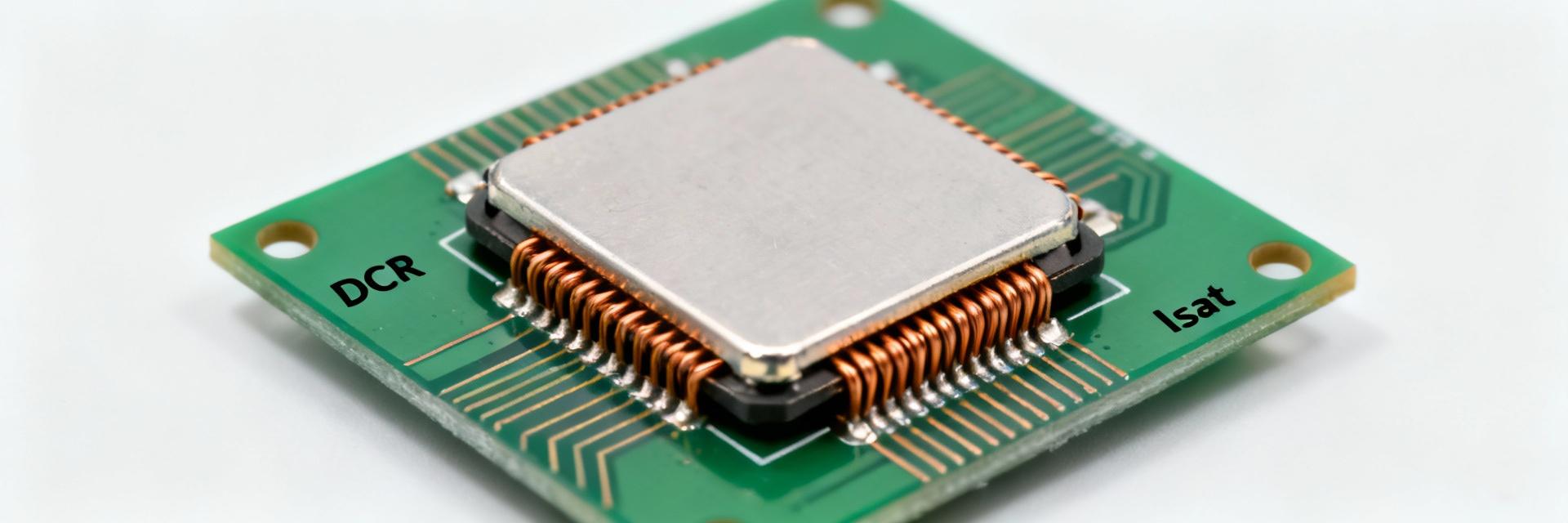
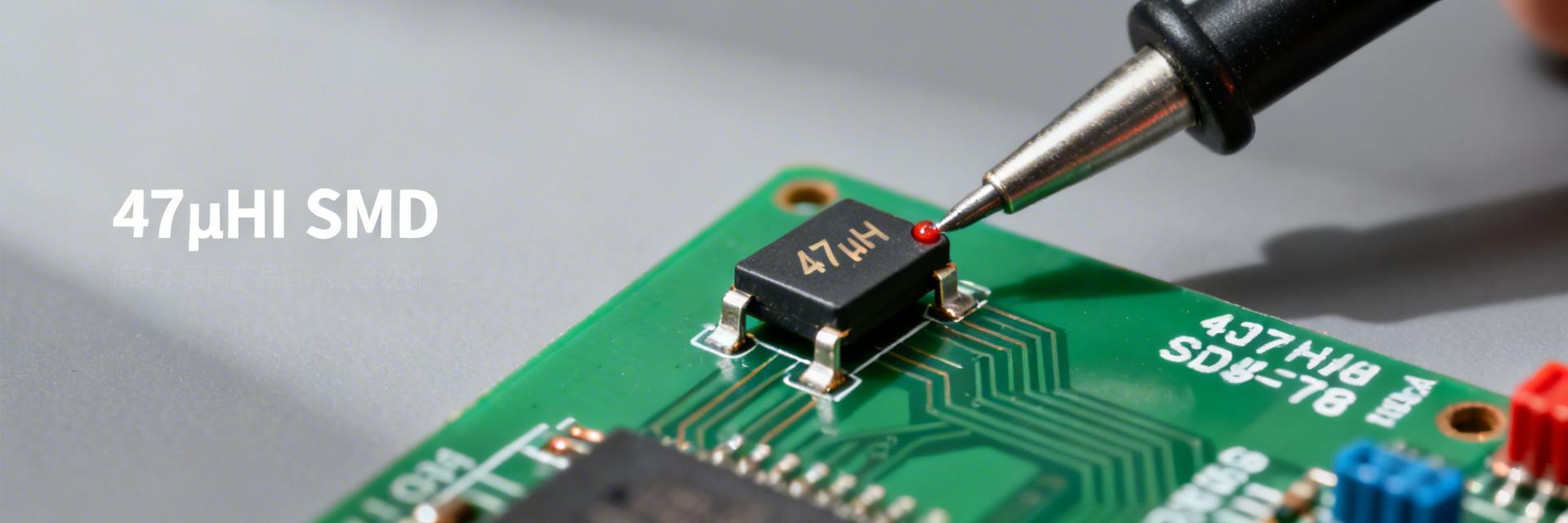
Baseline nominal values guide selection: typical 47 uH nominal, tolerance ±10–20%, Irms/Isat ranges, Rdc, Q, and SRF. Common footprints (1007/2518 metric to larger power packages) produce Rdc range 20–200 mOhm and SRF from 1–10 MHz depending on construction.
| Spec Parameter | Standard Gen-Purpose | High-Performance SMD | User Benefit |
|---|---|---|---|
| Inductance (L) | 47 uH (±20%) | 47 uH (±10%) | Reduces output ripple variability |
| Rdc (DCR) | 150 - 300 mΩ | 20 - 100 mΩ | Increases conversion efficiency by ~3-5% |
| Saturation (Isat) | Lower (Soft Sat) | Higher (Hard/Stable) | Prevents controller shutdown under load |
| Footprint | Bulky | Compact (Shielded) | Saves up to 30% PCB real estate |
2 — Test Plan & Measurement Methods
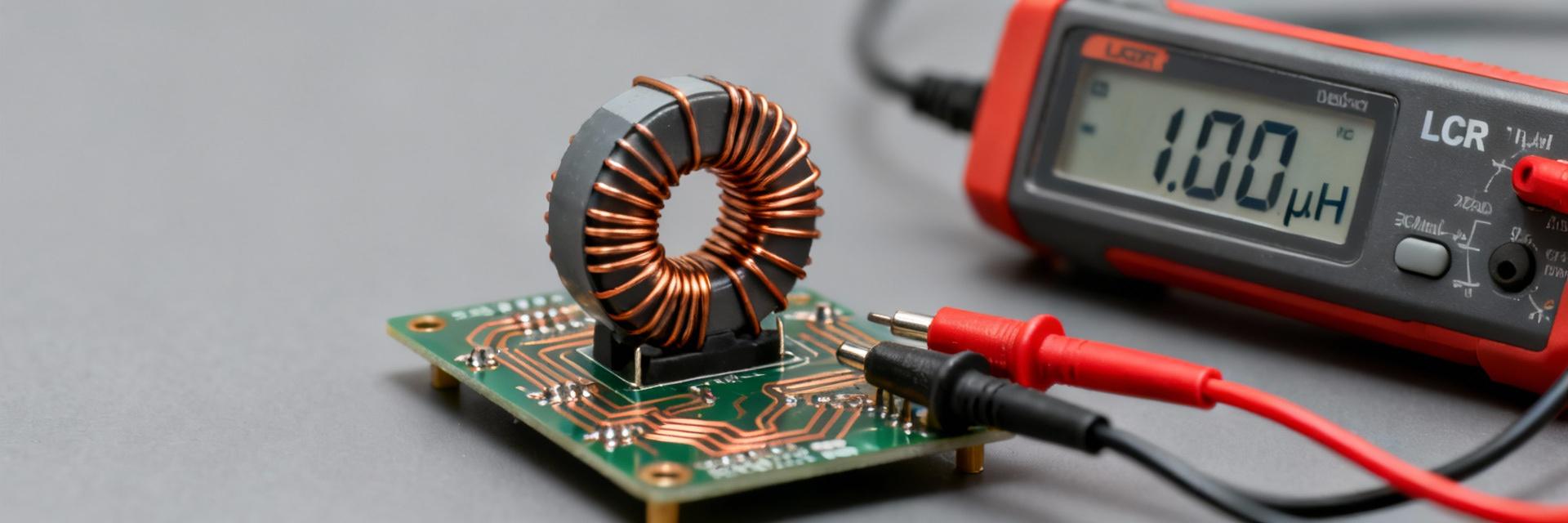
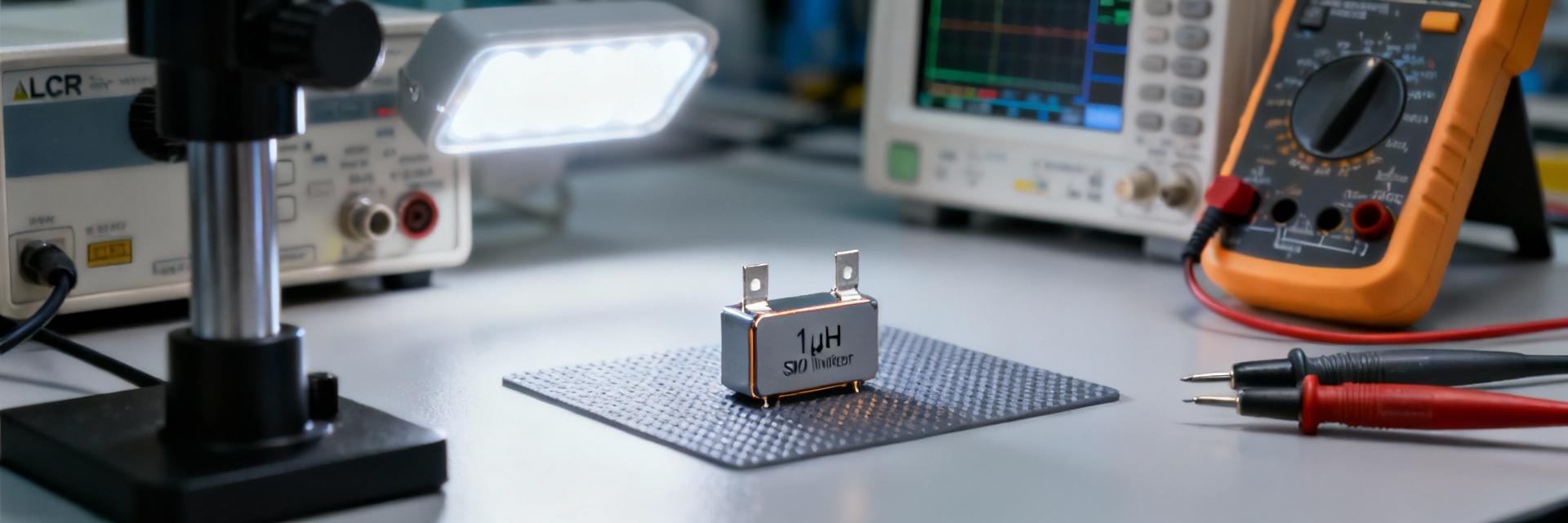
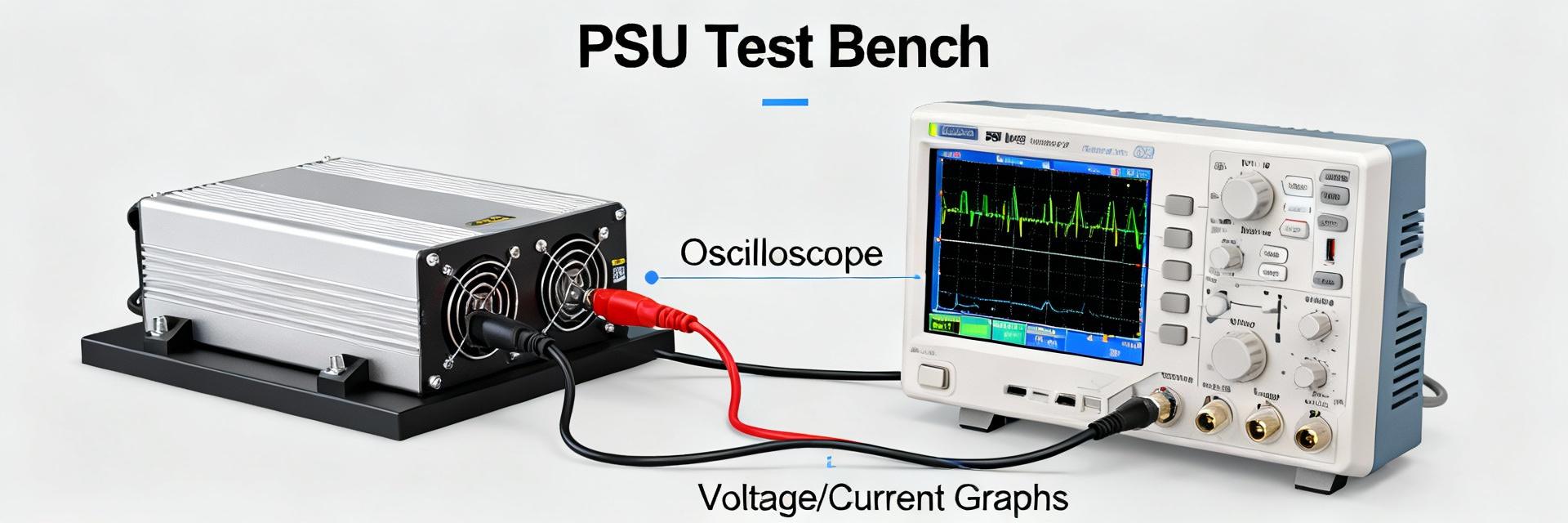
Accurate inductor performance needs L vs frequency, L vs DC bias, Rdc, Q, and SRF measurements. We used calibrated LCR meters at 1 kHz–1 MHz, a VNA for 10 kHz–30 MHz impedance sweeps, and current-sweep fixtures for L(I) curves. Following calibration and fixture de-embedding is vital for reliability (±0.5% for L, ±0.1 mOhm for Rdc).
👨🔬 Engineer's Insights & Layout Tips
By: Jonathan Sterling, Senior Hardware Architect
- Layout Strategy: To minimize EMI, avoid running high-speed signal traces directly under the 47uH inductor, even if it is shielded. Use a solid ground plane to dissipate heat.
- Thermal Relief: Use multiple thermal vias if the inductor is handling >2A continuous current. Measured data shows a 15°C temperature drop with optimized copper pours.
- Avoid This Trap: Don't rely solely on the "Nominal L" on the datasheet. Always simulate the "Worst Case" L at maximum operating temperature and DC bias.
3 — Electrical Performance Results: Lab Data
Inductance falls with DC bias; typical L(I) curves showed 10–25% reduction at nominal operating bias and up to 40% reduction at MHz-range frequencies. For converters, specify acceptable L loss (e.g., <15% at operating bias) or increase nominal L to meet in-circuit loop requirements.
Typical Application: Buck Filter
Hand-drawn sketch, not exact schematic / 手绘示意,非精确原理图
| Metric | Measured Range |
|---|---|
| Rdc (mOhm) | 20–200 |
| Q @ fsw | 5–50 |
| SRF (MHz) | 1–10 |
4 — Thermal Behavior & Saturation
Saturation causes abrupt L loss, potentially destabilizing control loops. Thermal-rise tests showed 10–40°C rise at rated current depending on PCB copper and proximity to heat sources. Improving copper area and via count reduces rise and increases allowable Irms.
5 — Failure Modes & Root Causes
Distinct failure signatures: sudden L drop (mechanical core cracks), gradual Rdc rise (inter-winding damage), and shifting SRF. Assembly stresses drive early failures, often clustered on parts with minimal pad fillet or excessive board flex during handling.
Summary & Procurement Checklist
- Account for Bias: Specify L vs I curves and accept parts with <15% loss at operating bias.
- Risk Derating: Derate Isat by 20–40% based on risk profile to maintain stability.
- Thermal Compliance: Require thermal-rise data and copper recommendations for efficiency.
Frequently Asked Questions
How should engineers validate inductor performance?
Validate with board-level L vs I and impedance sweeps under operating conditions using production PCB layouts.
What test data is critical for procurement?
Include L vs f, L vs I, Rdc, Q@fsw, SRF, thermal-rise at rated current, and reflow survivability.
When is a larger footprint recommended?
Choose a larger footprint when higher thermal performance, lower Rdc, or higher Isat are required to protect efficiency.