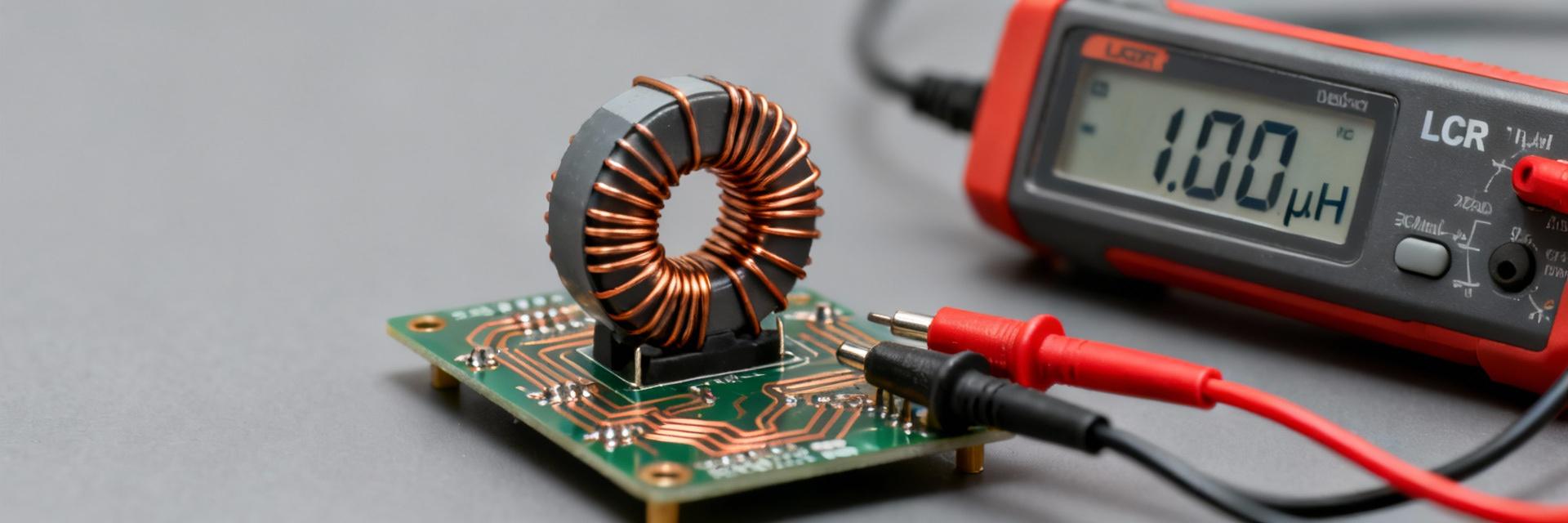
Small differences in DCR or saturation current listed on the manufacturer datasheet can change switching-regulator efficiency by several percent and alter thermal margin; that is the practical hook for reading the 784773082 datasheet.
The goal is actionable extraction: identify the rows to read, show which electrical and thermal numbers drive loss and margin calculations, and supply test and layout checklists you can use during BOM review and validation. The primary focus is on design use, not vendor comparison.
1 — Product background: what the 784773082 8.2 µH SMD power inductor is and where it’s used
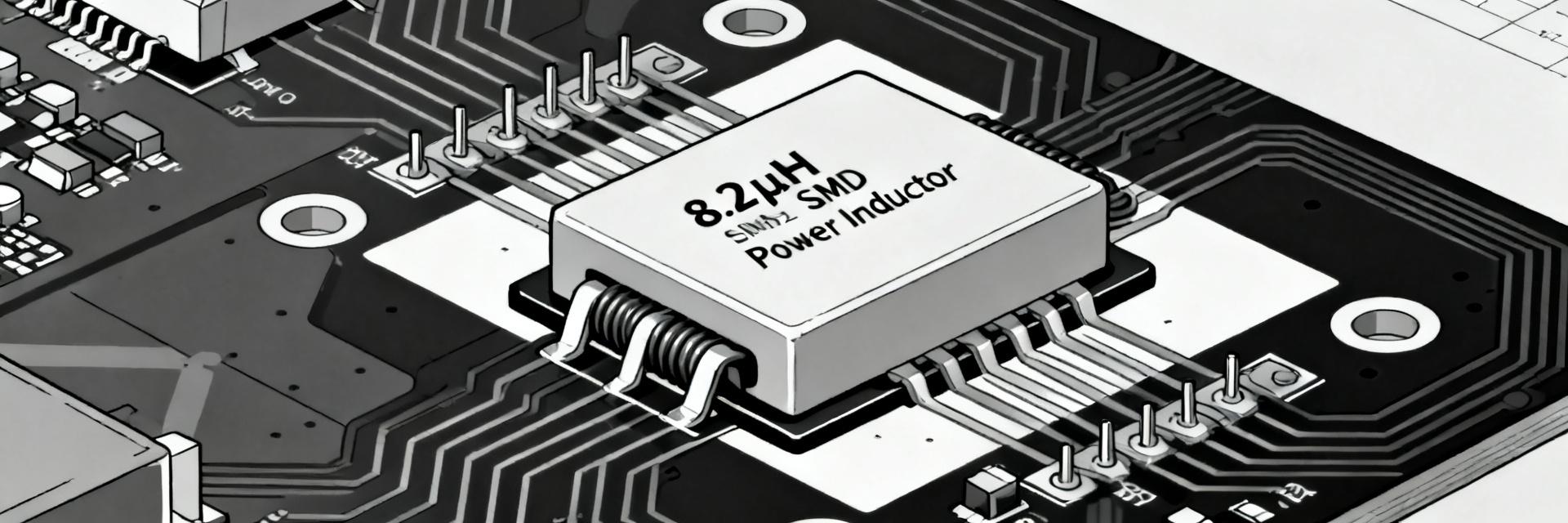
1.1 — Component role and typical applications
Point: An 8.2 µH SMD power inductor functions as the energy-storage and ripple-current element in switching converters.
Evidence: Datasheet nominal inductance (8.2 µH) and rated currents define its intended converter roles.
Explanation: In buck converters it sets ripple current and loop dynamics; in filters it shapes cutoff frequency. Typical uses include board-level DC‑DC regulators, power‑line filters and point‑of‑load stages in compact systems.
1.2 — Package, form factor and key physical constraints
Point: Package dimensions and height determine board fit and thermal path.
Evidence: The datasheet’s mechanical drawing and recommended land pattern list footprint, nominal height and solder fillet guidance.
Explanation: Confirm height under heatsinks, footprint compatibility with automatic pick‑and‑place, and reflow profile suitability; these govern placement near MOSFETs and large capacitors to avoid assembly or thermal conflicts.
2 — Datasheet deep-dive: how to read and prioritize key specs for 784773082
2.1 — Electrical specs to extract first
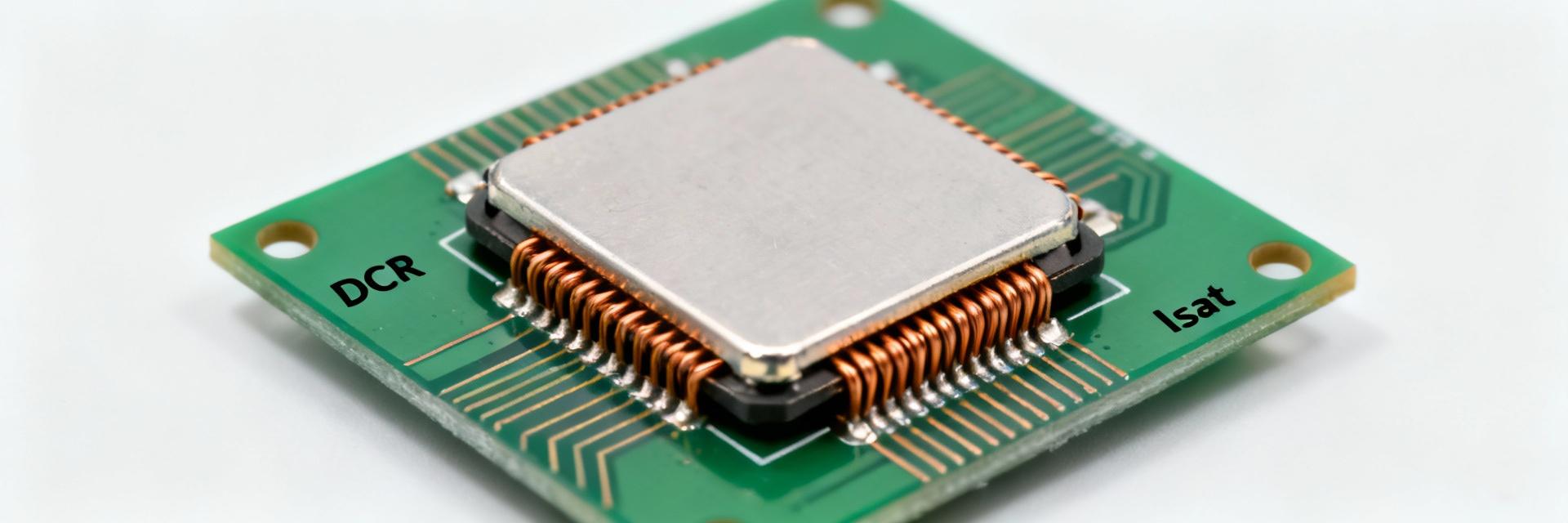
Point: Start by extracting inductance, tolerance, DCR, rated current, Isat/Irms and SRF.
Evidence: Datasheet rows typically list L (µH), ±% tolerance, DC resistance (Ω), Isat (defined at X% inductance drop), and Irms (temperature-rise current).
Explanation: Use L and tolerance to set control-loop and ripple; DCR to compute copper loss; Isat to ensure peak currents don’t collapse inductance; SRF to confirm inductive behavior at switching frequency.
2.2 — Thermal and reliability specs
Point: Thermal ratings and qualification define usable current and long-term reliability.
Evidence: Datasheet sections present operating temperature range, temperature coefficient of inductance, allowable ΔT for rated current, soldering profile and any qualification notes (e.g., AEC if supplied).
Explanation: Apply thermal derating: rated current often limits ΔT (for example, a 40°C rise); if the datasheet specifies a derating curve, use it to compute Irms at your ambient and rise target.
3 — Performance implications: calculating losses, saturation margin
3.1 — Loss and efficiency estimates
Point: Copper loss is the dominant, easily computed loss; core loss can matter at high frequency.
| Parameter | Example Value | Formula / Result |
|---|---|---|
| RMS Current (Irms) | 1.5 A | Input Metric |
| DC Resistance (DCR) | 0.12 Ω | Datasheet Spec |
| Estimated Copper Loss | - | ≈ 0.27 W (1.5² × 0.12) |
Explanation: Add core loss if the datasheet provides core‑loss per volume vs. frequency and flux; otherwise assume copper loss dominates at moderate switching frequencies.
3.2 — Saturation and DC bias effects
Point: DC bias reduces inductance and sets usable margin; Isat indicates collapse point.
Evidence: Datasheet usually supplies inductance vs. DC‑bias curve and Isat defined by % drop (e.g., 10–30%).
Rules of Thumb (Margin):
- Conservative: ≥ 2×Ipk
- Typical: 1.5×
- Aggressive: 1.1×
4 — PCB Integration & EMI
Footprint & Thermal: Follow recommended land patterns. Place close to switching node but avoid hotspots. Leave room for solder fillets to prevent tombstoning.
EMI Practices: Orient part to minimize loop area with input caps. Add RC snubbers for dv/dt spikes. Verify behavior via pre-compliance testing.
5 — Real-world Validation
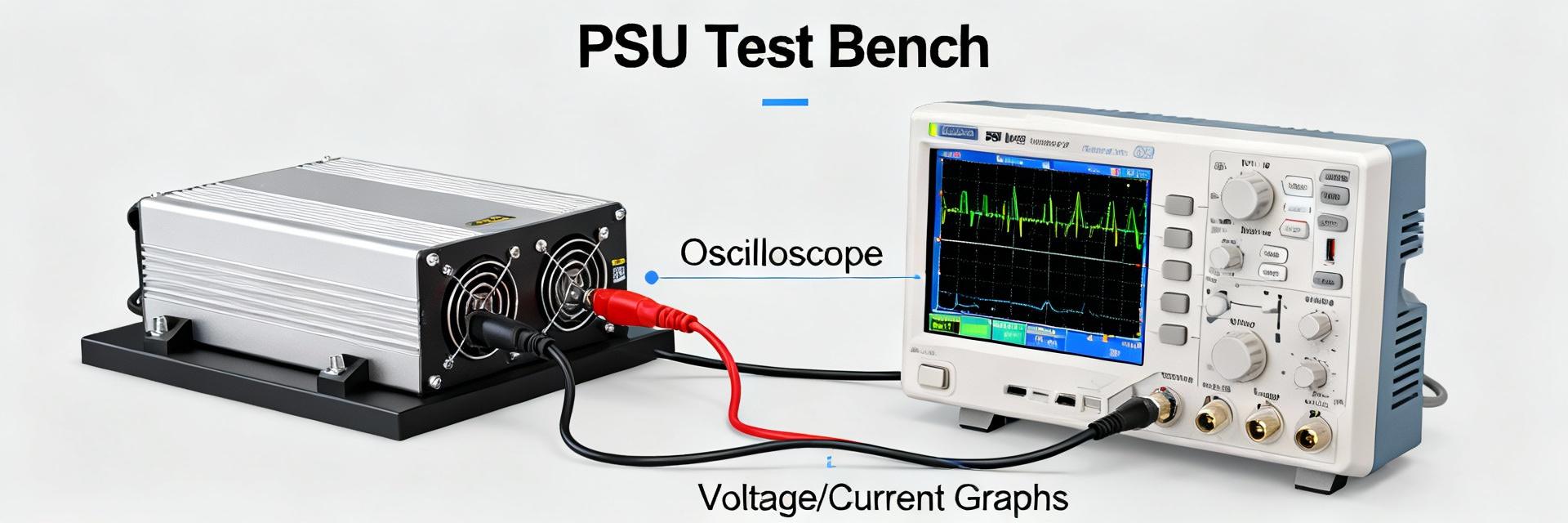
Lab Tests: Validate LCR inductance at frequency, current-biased sweeps, and 4-wire DCR. Use thermal imaging at rated current.
Failure Modes: Watch for solder fatigue, saturation under surge, and thermal drift. Mitigate by derating Isat for transients.
6 — Selection, Sourcing & Compliance Checklist
6.1 — Design Checklist
- ☐ Target inductance ±% tolerance
- ☐ DCR limit vs efficiency budget
- ☐ Isat/Irms safety margin
- ☐ SRF > Switching Frequency
6.2 — Substitution Rules
Match inductance and DC-bias behavior first, then DCR and package footprint. Use phrases like "8.2 µH SMD choke DC bias curve" for search.
Summary
- The first step is to read the datasheet table for L, DCR, Isat and Irms; these determine ripple, copper loss and saturation margin.
- Estimate copper loss using Irms^2×DCR; use the L vs DC‑bias curve to size ripple precisely.
- Validate with lab tests: measure inductance under DC bias, 4‑wire DCR, and thermal rise; reject parts with atypical drift.
Frequently Asked Questions
Q: What datasheet rows for 784773082 should I check first before BOM sign-off?
Check the nominal inductance and tolerance row, the DC resistance (DCR) row, Isat and Irms definitions, and any inductance vs. DC‑bias curve. Also verify mechanical drawing and recommended land pattern.
Q: How do I estimate efficiency impact from the 784773082 datasheet numbers?
Use the datasheet DCR to compute copper loss: Pcu ≈ Irms^2×DCR. Add core loss if the datasheet supplies it for your frequency and flux density. Compare total loss to input power to estimate efficiency delta.
Q: Which test should fail a lot-level acceptance for 784773082 parts?
Failure criteria include DCR out of tolerance, inductance at operating DC bias deviating beyond spec, and temperature rise above the datasheet ΔT limit at specified Irms.