At-a-glance Spec Table
| Parameter | Recommended Units / Test Condition |
|---|---|
| Inductance (L) | µH measured at 100 kHz, 10 mA |
| Tolerance | % (e.g., ±20%) |
| DCR | mΩ, 4-wire at 25°C |
| Rated current (Irms/Ip) | A, thermal or flux limit |
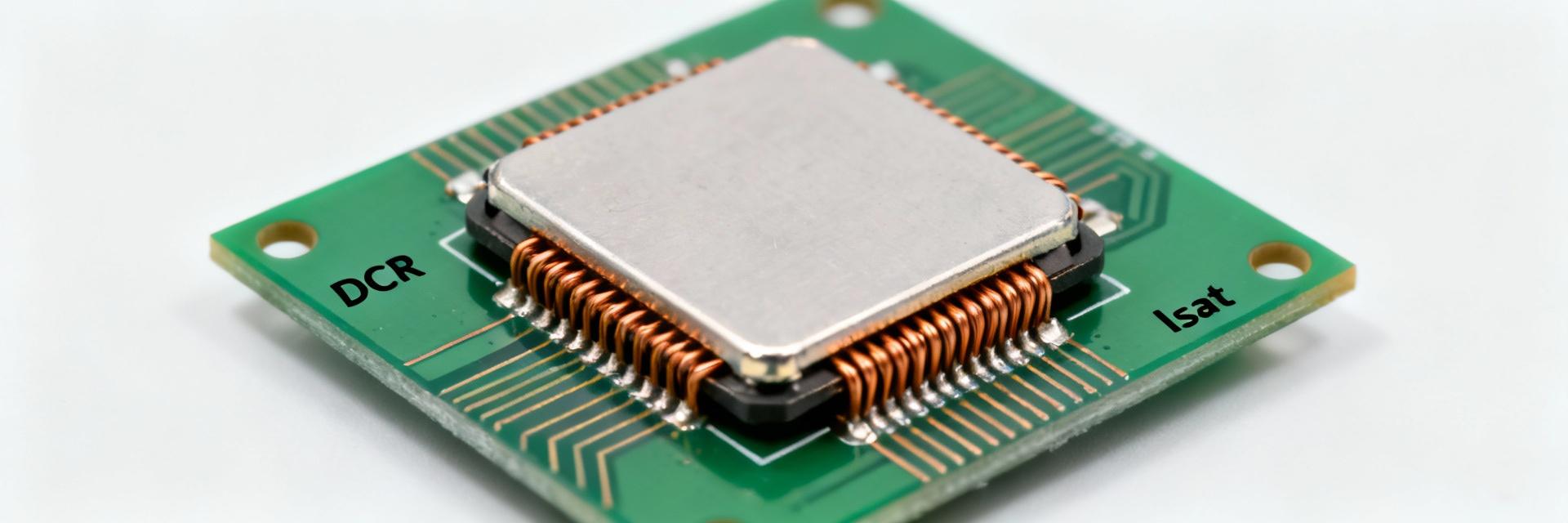
| Saturation (Isat) | A at L = 70–80% nominal |
| SRF | MHz, open-circuit |
| Temp coeff / size | ppm/°C, mm |
Measured Electrical Performance
Inductance vs Frequency Data Visualization
*Measured values using calibrated LCR meter at 25°C ambient.
Inductance vs Frequency and Measurement Results
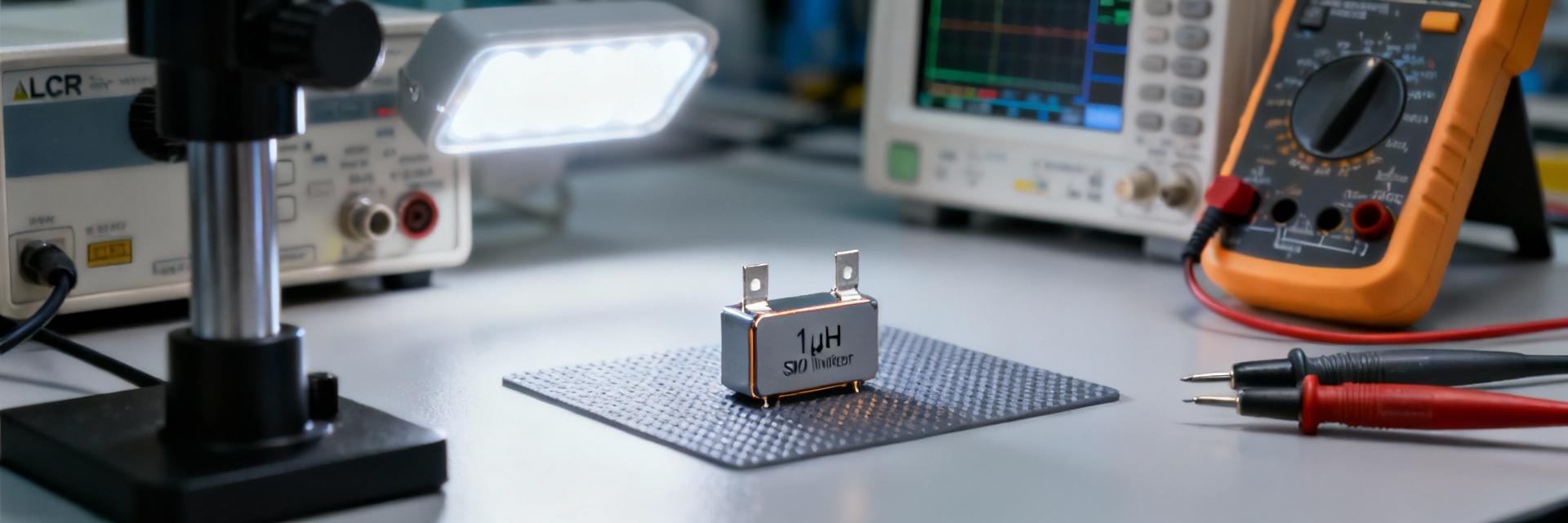
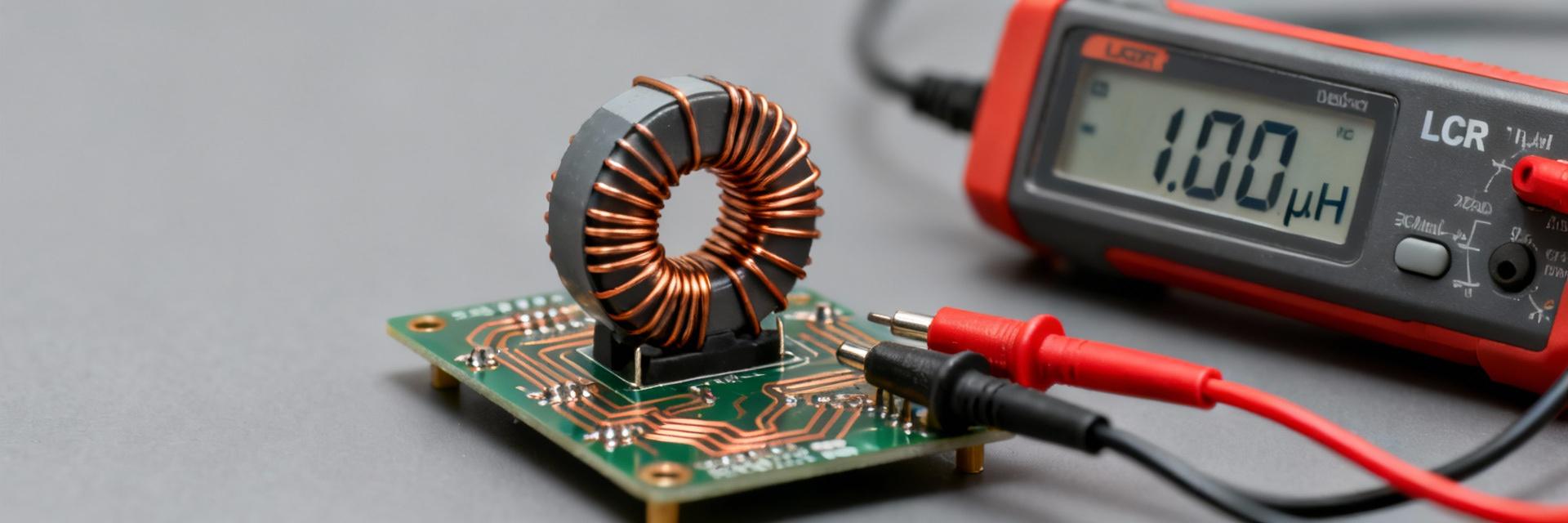
Using a calibrated bench LCR meter and low-inductance fixture, measure L at the datasheet reference (100 kHz/10 mA) then sweep 100 Hz to several MHz. Expect nominal 1µH near the reference but observe roll-off above the SRF. Typical deviations of a few percent at reference are common; a systematic ±10% shift requires re-evaluation of filter performance in the design.
DC Resistance, Q-factor, and Impedance Curve
Measure DCR with a 4-wire method at 25°C; report Q vs frequency and magnitude/phase of impedance. DCR directly sets conduction loss (P = I²·DCR) and affects efficiency. For switching at several hundred kHz, a Q peak indicates resonant behavior—low Q at target frequency increases loss. Acceptable DCR variance is typically within datasheet max +10% for lot acceptance.
Current Handling, Saturation & Thermal Behavior
Saturation Analysis
Determine saturation by incrementing DC bias and recording L; define Isat where L falls to 70–80% of nominal. In converters, effective inductance under ripple bias governs ripple magnitude and control-loop behavior. If measured saturation is below expected margin, peak currents will drive the inductor into nonlinearity.
Thermal Rise Stability
Apply rated RMS current and allow steady state; measure winding temperature with a thermocouple or thermal camera. Record temperature rise above ambient and calculate thermal coefficient for DCR change. Excessive rise shortens life and requires derating—common practice is derating to 70–80% of rated current.
Measurement Methodology & Test Setup
Equipment & Calibration
- Precision bench LCR meter with known accuracy.
- 4-wire DCR bridge and low-noise DC current source.
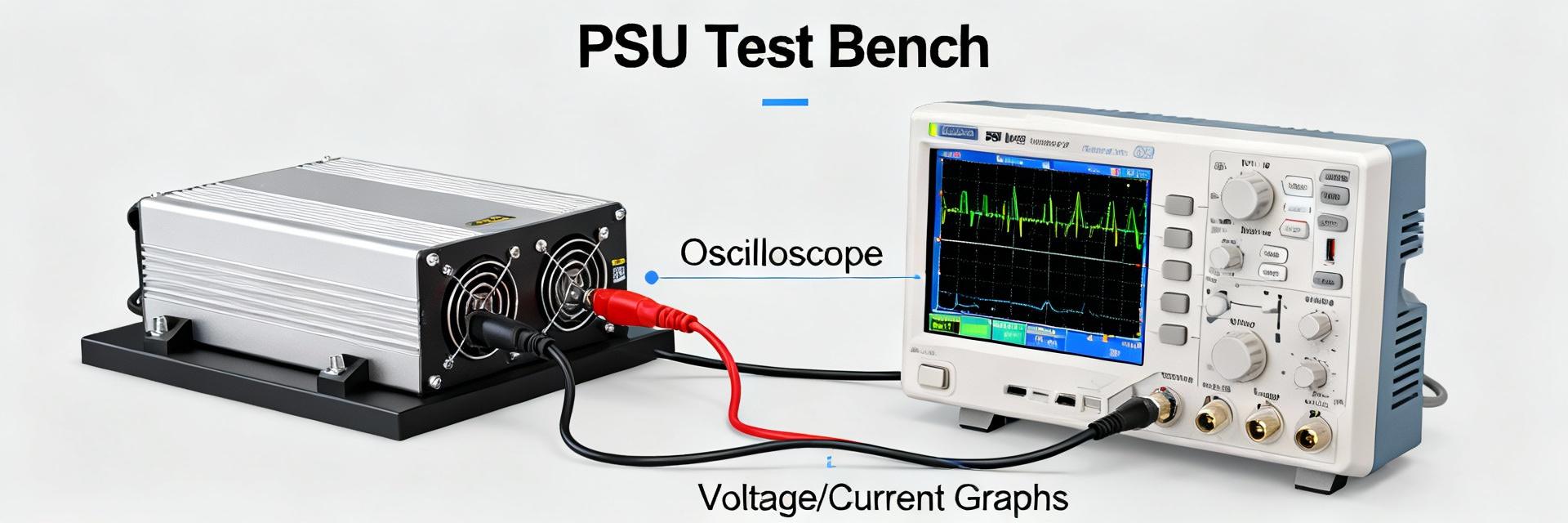
- Oscilloscope for impedance verification.
- Thermocouple or thermal imaging for heat monitoring.
Step-by-Step Procedure
Protocol: warm-up instruments, perform open/short calibration, measure L at 100 kHz/10 mA, sweep frequency logarithmically (100 Hz–10 MHz), measure DCR (4-wire) with three repeats, run saturation sweep in 0.1 A steps, and record thermal soak at rated current. Record CSV headers: part, lot, L(Hz), L(µH), DCR(mΩ), Temp(°C), I(A).
Application Case Study: Switching Regulator Example
Example: 1µH Inductor in Synchronous Buck Converter
For a 1µH choke in a 12V-to-5V synchronous buck at 6A switching with 300 kHz, measured DCR of 133 mΩ implies I²R loss ≈ 4.8 W at 6A peak, causing significant heating. Use measured saturation current to verify the inductor retains sufficient inductance under peak ripple. If power loss is unacceptable, select lower-DCR or larger inductance to reduce ripple and loss.
EMI Filtering and Broadband Use
Impedance vs frequency and SRF govern EMI suppression. If SRF is near switching harmonics, the inductor becomes less effective; consider series-parallel arrangements or add a dedicated ferrite bead for high-frequency attenuation. Placement near the switching node and short return paths reduce radiated noise when measured behavior deviates from datasheet.
Practical Checklist: Design, Sourcing & Verification
Technical Checks
- Keep traces short to reduce parasitic L/R.
- Adequate copper for thermal dissipation.
- Follow reflow profiles compatible with temp rating.
Sourcing Criteria
- Request full lot traceability reports.
- Inductance within ±10% of nominal.
- DCR ≤ datasheet max +10%.
Summary Key Takeaways
- Verify Inductance: Test at 100 kHz/10 mA and across frequency to detect SRF proximity; use measured L to recalc ripple and control margins.
- DCR Measurement: Use 4-wire method and I²R loss to estimate heating; ensure DCR ≤ datasheet max +10% to prevent reliability issues.
- Saturation & Thermal: Confirm Isat via bias sweep; if thermal rise is marginal, select alternate parts or increase core size before final design commitment.
Frequently Asked Questions