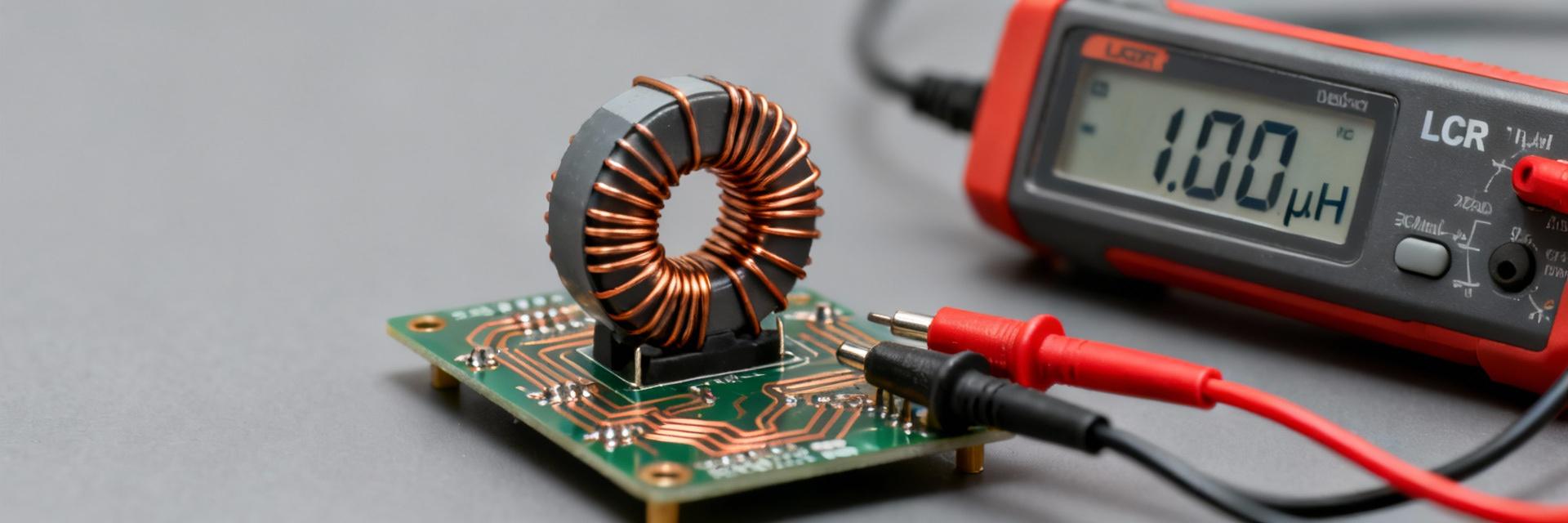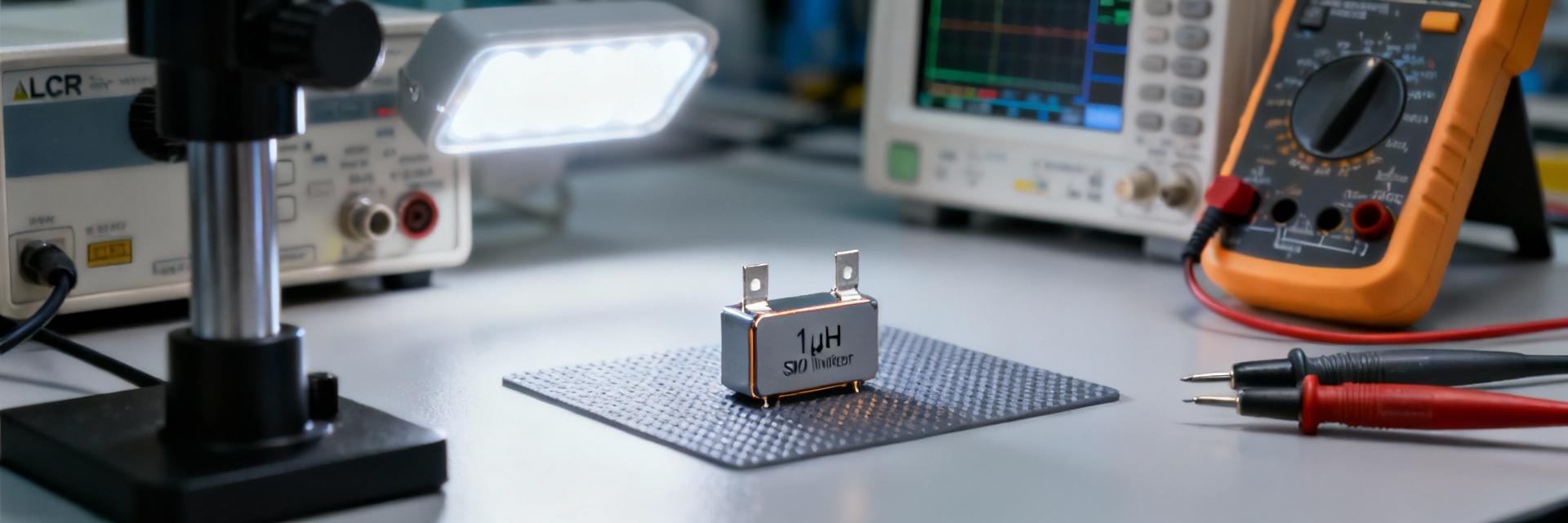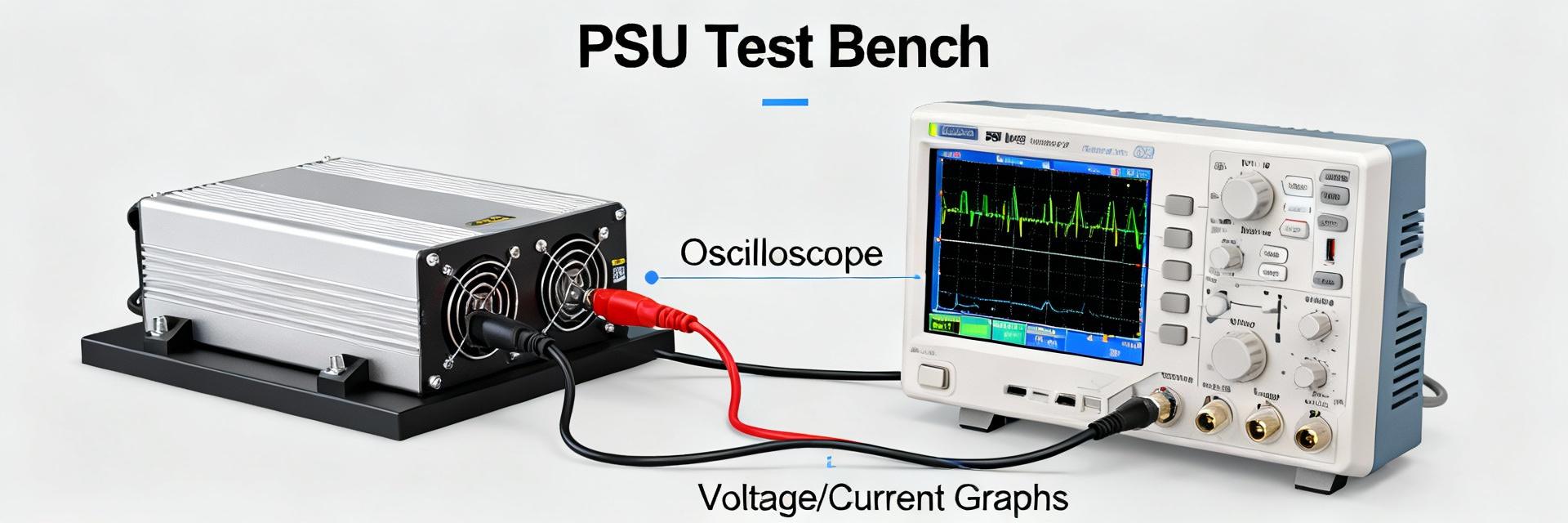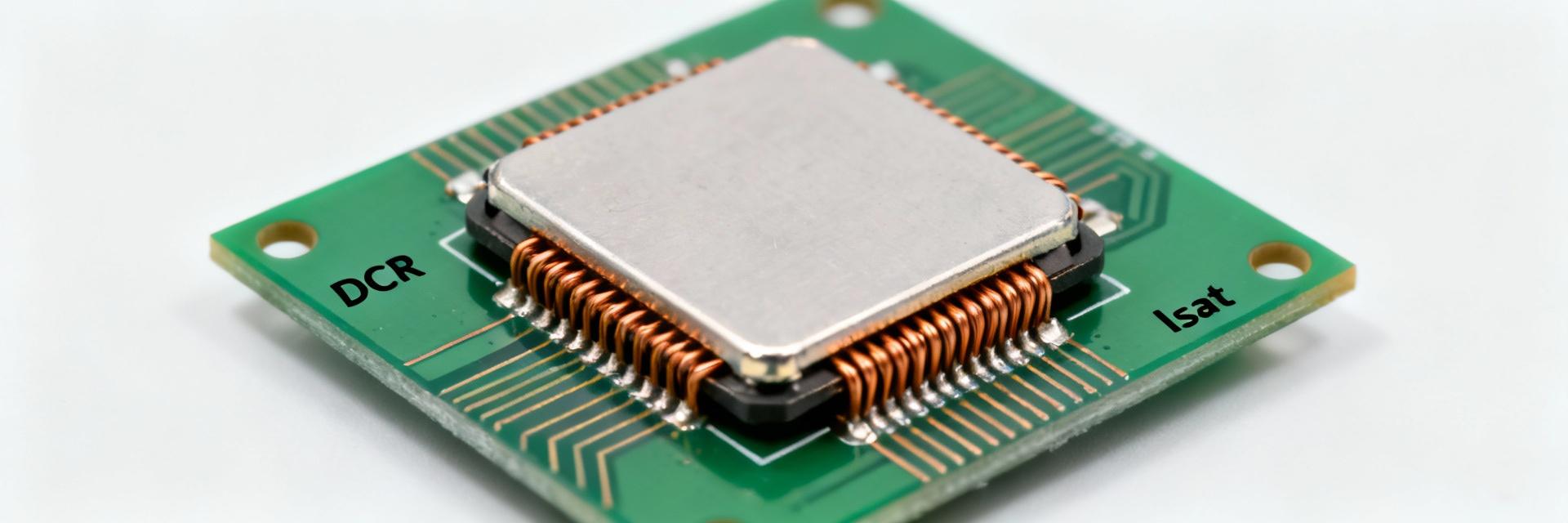
Point: This report consolidates the key measured and datasheet numbers for 784771220—providing engineers a single reference to verify inductance, DC resistance, saturation current and operating temperature for typical power designs.
Evidence: The part’s published specs list a nominal inductance, maximum DCR, Isat and an operating temperature range that directly affect converter efficiency and thermal margin.
Explanation: The goal is actionable: read the datasheet, validate performance on the bench, and select/integrate the part correctly into buck converters, EMI filters or other power blocks.
1 — Product overview & quick specs (784771220)

What this part is and target applications
Point: 784771220 is a shielded SMD power inductor intended for low- to mid-current DC‑DC converters and EMI suppression.
Evidence: As a molded/shielded device its role is to store energy and limit ripple current in switch-node applications while minimizing radiated emissions.
Explanation: Designers will commonly place it in buck converter output filters, input EMI filters ahead of regulators, or any block needing compact energy storage; consult the datasheet for thermal and mounting constraints before final placement.
Snapshot table: essential specs to show at-a-glance
Point: A compact table helps rapid comparison during part selection.
Evidence: Below are the essential quick specs engineers expect to find and verify for 784771220.
Explanation: Use this table as the first checklist item when you open the datasheet and before ordering evaluation samples.
| Parameter | Typical / Max |
|---|---|
| Nominal inductance | 22 µH |
| Tolerance | ±20% |
| Max DCR (20°C) | ≈0.60 Ω |
| Saturation current (Isat, 30% drop) | ≈0.35 A |
| Rated current (Irms or thermal) | ≈0.20–0.30 A |
| Self‑resonant frequency (SRF) | ~5 MHz (typical) |
| Operating temperature | -40 °C to +125 °C |
| Package / dimensions | Small SMD shielded package, consult mechanical drawing |
2 — Electrical performance: detailed specs, meaning & limits (784771220)
Key electrical parameters explained (L, DCR, Isat, Irms, SRF)
Point: Each electrical parameter maps to a performance impact in a converter.
Evidence: For 784771220, L = 22 µH sets steady‑state ripple; DCR (≈0.60 Ω) defines conduction loss; Isat (~0.35 A) tells when inductance collapses under DC bias; Irms (≈0.20–0.30 A) limits thermal dissipation; SRF (~5 MHz) bounds usable frequency.
Explanation: Use these specs to compute ripple current, copper loss (I²·DCR), and expected drop in L under DC bias; when calculating efficiency, include DCR losses and when calculating transient response, model reduced L at elevated bias or temperature.
Limits, derating rules and temperature behavior
Point: Saturation and thermal derating define safe continuous currents.
Evidence: The datasheet's derating curve typically shows inductance vs. DC bias and current vs. temperature; for 784771220, plan continuous current at a conservative fraction of Isat (e.g., ≤50–70% of Isat) and check loss heating at Irms.
Explanation: Practical rules: limit continuous DC to ~60% of listed Isat for long life, derate further if ambient exceeds 85 °C, and allow a safety margin for board heating and repeated transients; read the datasheet curves to convert a % inductance drop into a usable current limit.
3 — Mechanical, footprint, soldering & reliability guidance
Dimensions, recommended land pattern & reflow profile
Point: Verify mechanical tolerances and design a compatible land pattern.
Evidence: The part’s mechanical drawing shows pad spacing, body height and recommended copper land.
Explanation: Create a PCB footprint per the drawing, include paste stencil openings sized to avoid tombstoning (60–80% of pad), and use a lead‑free reflow profile with peak 245 °C max and a 20–40 second soak in the recommended peak zone; inspect coplanarity and height tolerances during DFM review.
Handling, vibration, aging and quality checks
Point: Mechanical stress and ESD can degrade performance or cause failure.
Evidence: Shielded SMD inductors are sensitive to board flex and heavy vibration; failures show as cracking, cracked solder fillets, or changing DCR.
Explanation: Handle parts with ESD protection, minimize board flex during assembly, apply vibration test profiles if the end product is mobile, and include automated optical inspection (AOI) checks for solder fillet quality and X‑ray for hidden defects on first articles.
4 — Test methods, performance graphs & benchmarking
Recommended bench tests and measurement setup
Point: Validate datasheet claims on the bench with repeatable setups.
Evidence: Essential tests: inductance vs. frequency (LCR meter), DCR (four‑wire ohm meter/kelvin), saturation current (measure L or inductance drop vs. DC bias), impedance (VNA or impedance analyzer), and temperature dependence (thermal chamber).
Explanation: Use short Kelvin leads, fixture correction, and specified test frequencies (e.g., 100 kHz for switching inductors); set pass/fail thresholds tied to datasheet minima (e.g., L within tolerance, DCR not exceeding max, Isat producing <30% L drop at specified current). Repeatability tips: average multiple sweeps and log fixturing geometry for reproducibility.
Interpreting performance graphs: examples to include
Point: Graphs reveal real‑world behavior not obvious from single numbers.
Evidence: Key plots are impedance vs. frequency, inductance vs. DC bias, and DCR vs. temperature.
Explanation: Impedance vs. frequency shows usable bandwidth before SRF; L vs. DC bias quantifies performance loss under load and helps determine usable current; DCR vs. temperature lets you predict copper loss at operating point. For comparative benchmarking, plot identical nominal inductance parts and compare DCR vs. Isat tradeoffs—prefer lower DCR for efficiency or higher Isat for higher peak currents depending on system priorities.
5 — Selection checklist, integration tips & datasheet reading guide
Datasheet checklist: must-verify items before design sign-off
Point: A concise datasheet checklist prevents late surprises.
Evidence: Verify nominal inductance & tolerance, DCR at specified temperature, saturation current and its test condition, thermal and dimensional drawings, recommended PCB land pattern and soldering profile, and reliability/qualification notes.
Explanation: Cross‑check the specs box‑by‑box against your design requirements and test plans—confirm that the listed specs match the intended switching frequency, peak currents, and assembly process before committing to a BOM.
Integration tips and common pitfalls
Point: Proper integration avoids performance loss and reliability issues.
Evidence: Common mistakes include confusing peak vs. RMS current, ignoring inductance drop under DC bias, and poor placement that increases EMI.
Explanation: Match the inductor to switch‑node peak currents (ensure Isat margin), account for RMS heating in DCR losses, place the inductor close to the regulator to minimize loop area, and add damping or snubbing if ringing near SRF appears. When to choose a different part: opt for a lower DCR or higher Isat variant if efficiency or peak current needs exceed limits.
Summary
- Use the quick specs table to confirm nominal inductance, DCR and current ratings from the datasheet before layout; then validate with bench tests for 784771220.
- Derate continuous current to ~50–70% of Isat, and check L vs. DC bias and DCR vs. temperature to predict in‑system behavior.
- Follow mechanical drawings for land pattern and a controlled reflow profile; perform AOI/X‑ray and vibration checks for reliability.
784771220 — FAQ: common design questions
What is the practical continuous current limit for 784771220?
Point: Continuous current should be conservative relative to Isat.
Evidence: A safe working rule is to use ~50–70% of the saturation current as continuous current, depending on allowed temperature rise.
Explanation: For example, if Isat is specified at ~0.35 A, limit continuous DC to ≈0.18–0.25 A and validate with thermal measurements under expected ambient and board heating.
How should I test saturation behavior for 784771220?
Point: Measure inductance while applying incremental DC bias.
Evidence: Use an LCR meter with a DC bias source or a VNA+bias tee, record L vs. DC current and identify the current where L drops by 20–30%.
Explanation: That drop point approximates Isat; use the datasheet’s stated test condition for parity and ensure the test fixture adds minimal series impedance.
Are there soldering or board layout risks specific to 784771220?
Point: Assembly and placement affect reliability and performance.
Evidence: Use the recommended land pattern, controlled stencil release, and avoid excessive board flex or nearby heavy thermal sources.
Explanation: Inspect solder fillets during first articles, perform a sample reflow cycle, and include vibration/thermal cycling if the end product operates in demanding environments.