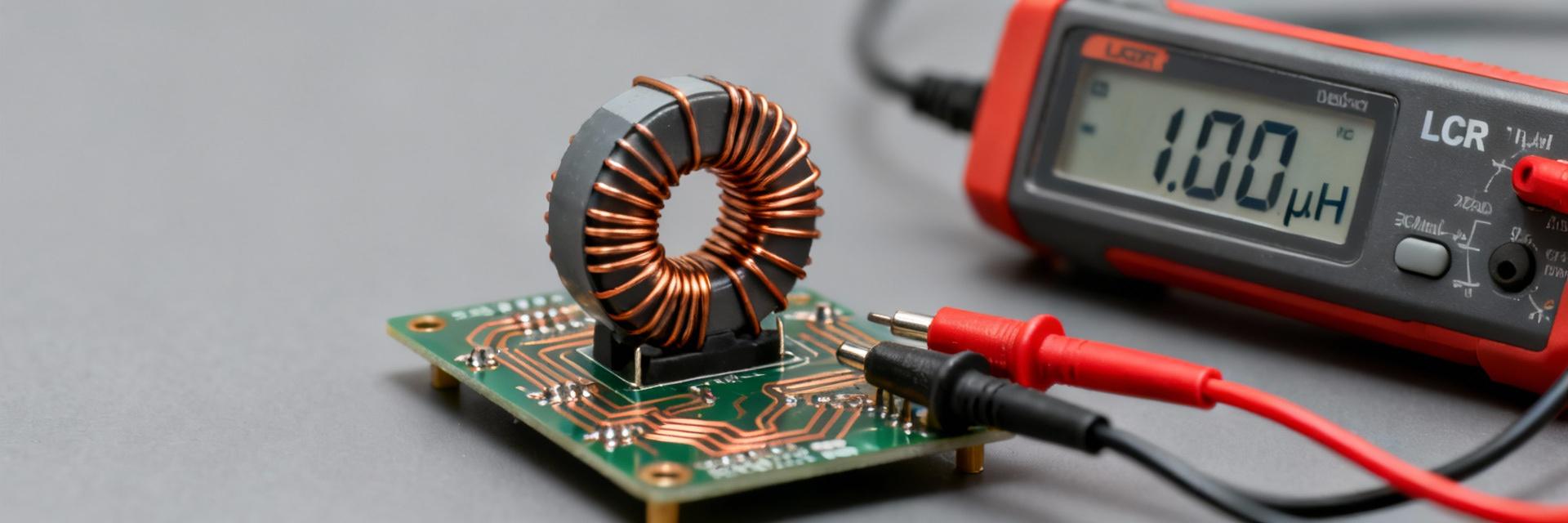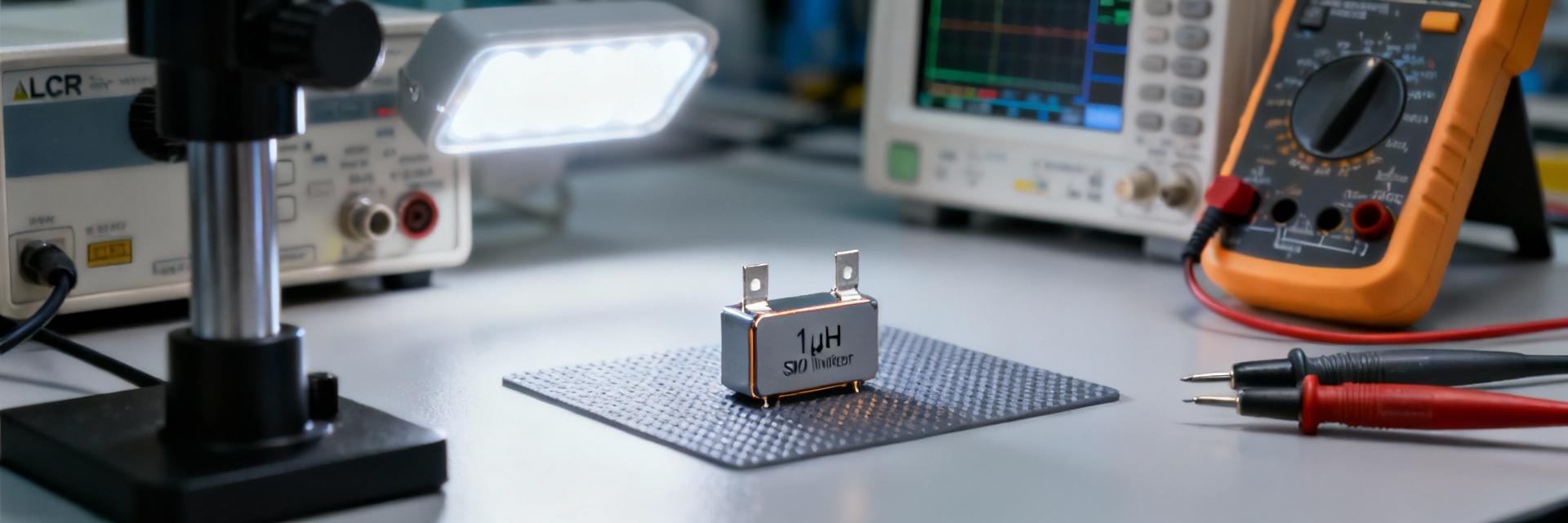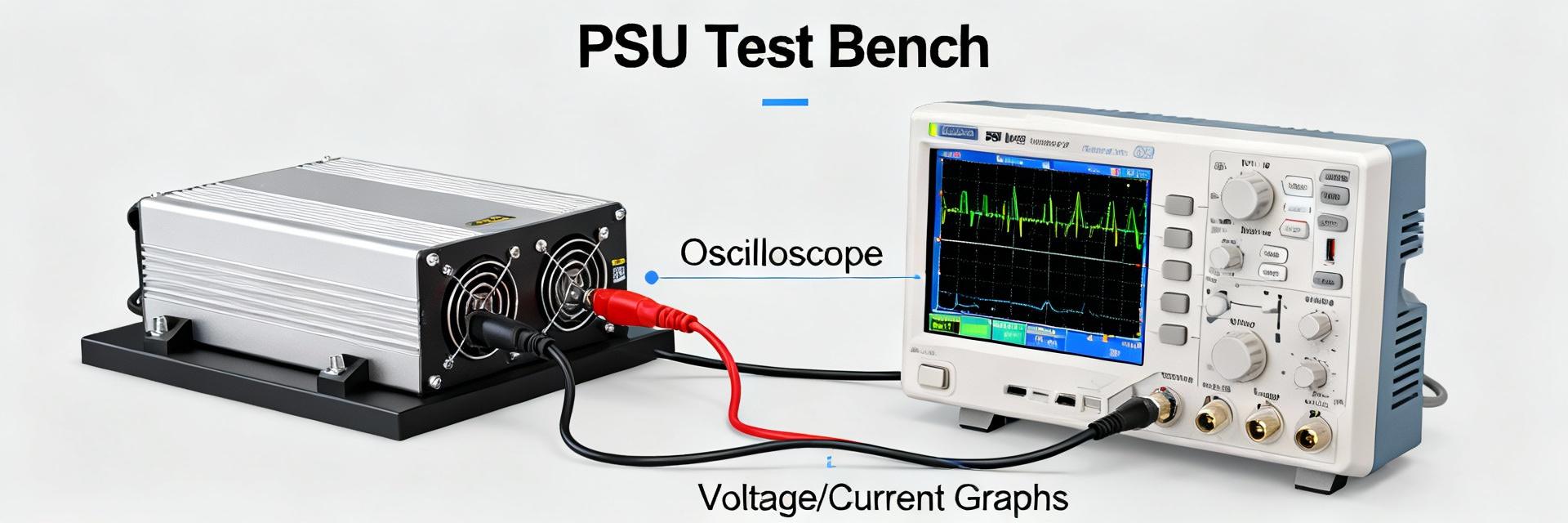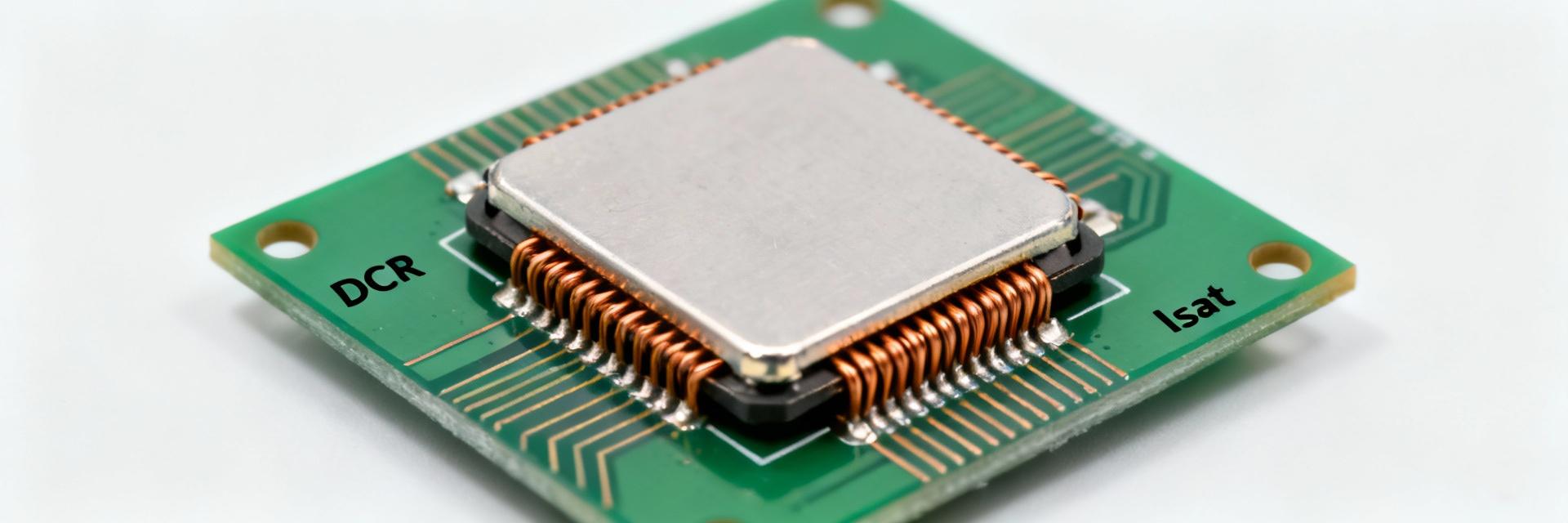
The 784771082 appears as an 8.2 µH, shielded SMD power inductor specified for mid‑ampere buck converters and compact power rails; this introduction summarizes key specs so engineers can quickly judge fit. The part’s nominal values, measured DCR and current ratings drive most selection tradeoffs, and the following sections compile datasheet figures, test guidance, and implementation checklists for practical evaluation.
1 — Product overview & background
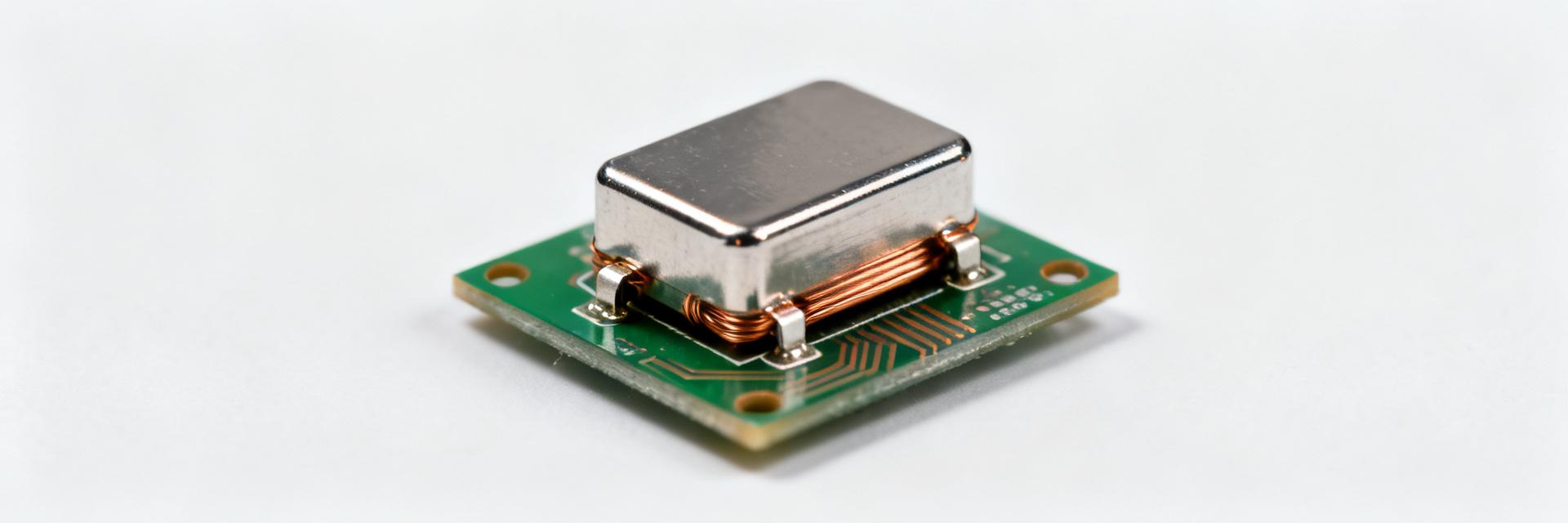
What the 784771082 is (short technical summary)
Point: The part is an MLF-style, shielded surface-mount power inductor intended for board-level DC‑DC use. Evidence: Nominal inductance is 8.2 µH with a DCR on the order of tens of milliohms and rated RMS current around 5 A. Explanation: Its compact rectangular package and shielding reduce EMI and make it suitable for space‑constrained converters where moderate inductance and current capability are needed.
- Nominal inductance: 8.2 µH
- Rated Irms: ≈5.05 A; Isat: ≈5.5 A
- Typical DCR: ≈24 mΩ
- Form factor: shielded SMD
Key identifiers and ordering considerations
Point: Correct procurement requires verifying tolerance, packaging, and qualification flags. Evidence: Part numbers often encode tolerance and packaging (reel vs. tray) while some lines offer automotive qualification. Explanation: When ordering, confirm inductance tolerance, reel size, moisture sensitivity level if listed, and whether AEC‑Q or similar qualification is needed for your application; prepare alternates with similar Irms/DCR tradeoffs.
- Checklist: confirm inductance & tolerance, DCR, Irms/Isat, package footprint, reel size, and qualification.
- Consider alternates with higher SRF or lower DC bias droop for high‑frequency switching.
2 — Complete electrical specs & data breakdown
DC and AC electrical specs to highlight
Point: Core electrical specs determine losses, saturation behavior, and frequency limits. Evidence: Key values include 8.2 µH inductance (± tolerance), DCR ≈24 mΩ, Irms ≈5.05 A, Isat ≈5.5 A, and an SRF that typically sits above switching harmonics for mid‑MHz use. Explanation: Differentiating measured items (DCR, Irms, Isat) from calculated ones (temperature rise estimates) helps set realistic expectations in simulation and bench tests.
How to read the datasheet curves (loss, saturation, impedance)
Point: Datasheet plots reveal inductance vs. DC bias, impedance vs. frequency, and thermal rise vs. current. Evidence: Inductance droop under DC bias indicates how much effective inductance remains at operating current; impedance curves show where the part stops behaving inductively. Explanation: Use the L vs. I curve to predict ripple performance, the impedance trace to check SRF proximity to switching harmonics, and thermal graphs to set continuous current limits.
3 — Performance characteristics & testing guidance
Thermal limits, derating, and power loss
Point: Losses are I^2·R and dictate heating and derating. Evidence: Using DCR ≈24 mΩ and a continuous Irms of 5.05 A, copper loss = I^2·DCR ≈ (5.05^2)·0.024 ≈ 0.612 W. Explanation: That dissipation produces a measurable temperature rise; apply a safety margin (typical 20–30%) between continuous Irms and Isat for long life and set PCB copper and airflow to spread heat.
Recommended tests and measurement setup
Point: Practical verification requires consistent fixtures and settings. Evidence: Measure L vs. I with an LCR meter or impedance analyzer using a calibrated current ramp; use a four‑terminal method for DCR and an impedance sweep to find SRF. Explanation: Recommended settings: LCR at 100 kHz for power inductors, current ramp in 0.1 A steps to Isat+ margin, and thermal imaging at steady‑state to validate PCB cooling; document pass/fail thresholds versus datasheet curves.
4 — Application examples & selection case studies
Typical circuits: A synchronous buck at 5 A uses similar Irms and Inductance to balance ripple and transient response. Explanation: For a 5 A buck at 500 kHz, an 8.2 µH inductor yields low ripple current but may be bulky; at higher switching frequencies designers prefer lower L to reduce size and increase SRF headroom.
Filter use: As a post‑regulator filter, 8.2 µH provides significant attenuation. Explanation: Use when space allows and when ripple reduction is prioritized over absolute size; account for DC bias droop in ripple calculations.
Inrush limiting: Inrush‑current limiting integration is constrained. Explanation: Choose this part only if thermal budget and steady losses are acceptable; otherwise select a higher‑Isat or lower‑DCR alternative.
When to choose an alternative value or topology
Point: Selection signals include excessive inductance droop, SRF limits, or thermal stress. Evidence: If operating current causes >30% inductance reduction or SRF sits near switching harmonics, performance degrades. Explanation: Decision rules: if switching frequency >1 MHz prefer lower L/higher SRF; if steady currents approach Isat, select higher‑current family or parallel inductors; if thermal rise exceeds allowable, lower DCR units are preferable.
5 — PCB integration, procurement & checklist
Footprint, soldering, and assembly considerations
Point: Proper land pattern and process keep inductors reliable and low‑stress. Evidence: Use recommended pad geometry, adequate solder fillet, and avoid excessive corner mechanical stress during handling and reflow. Explanation: Solder paste coverage should prevent tombstoning but allow fillet formation; follow standard reflow profiles for lead‑free alloys and respect any moisture sensitivity levels noted in the datasheet.
- Follow manufacturer land pattern
- Provide thermal copper pour
- Use controlled ramp reflow
- Impose mechanical twisting forces
- Overclean with aggressive solvents
- Exceed reflow peak temps
Final selection & procurement checklist
Point: A final checklist streamlines approval. Evidence: Confirm inductance tolerance, DCR, Irms/Isat, SRF, footprint, reel size, and qualification flags before purchase. Explanation: Sample and test early in POC, verify long‑term availability and lead times, and record bench results versus datasheet curves for part approval and lifetime forecasting.
- ✔️ Verify inductance and tolerance
- ✔️ Validate DCR and loss at operating current
- ✔️ Confirm Irms, Isat, SRF, footprint, reel size, and qualification
- ✔️ Order samples and run L vs. I, SRF, DCR, and thermal tests