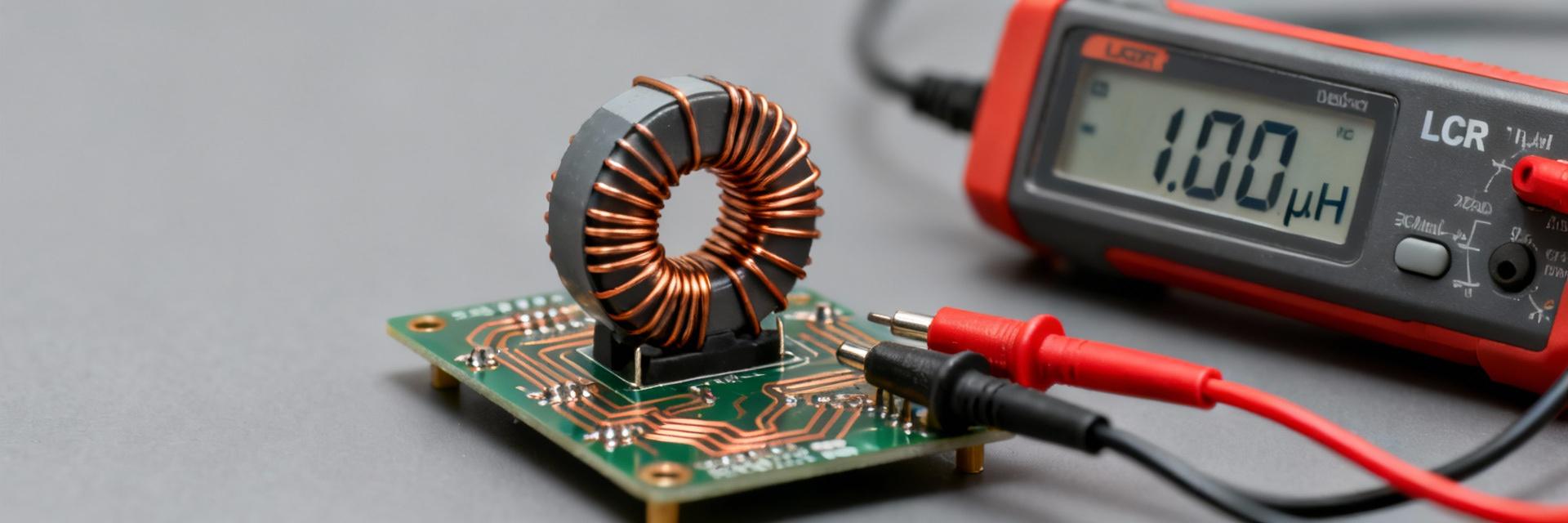
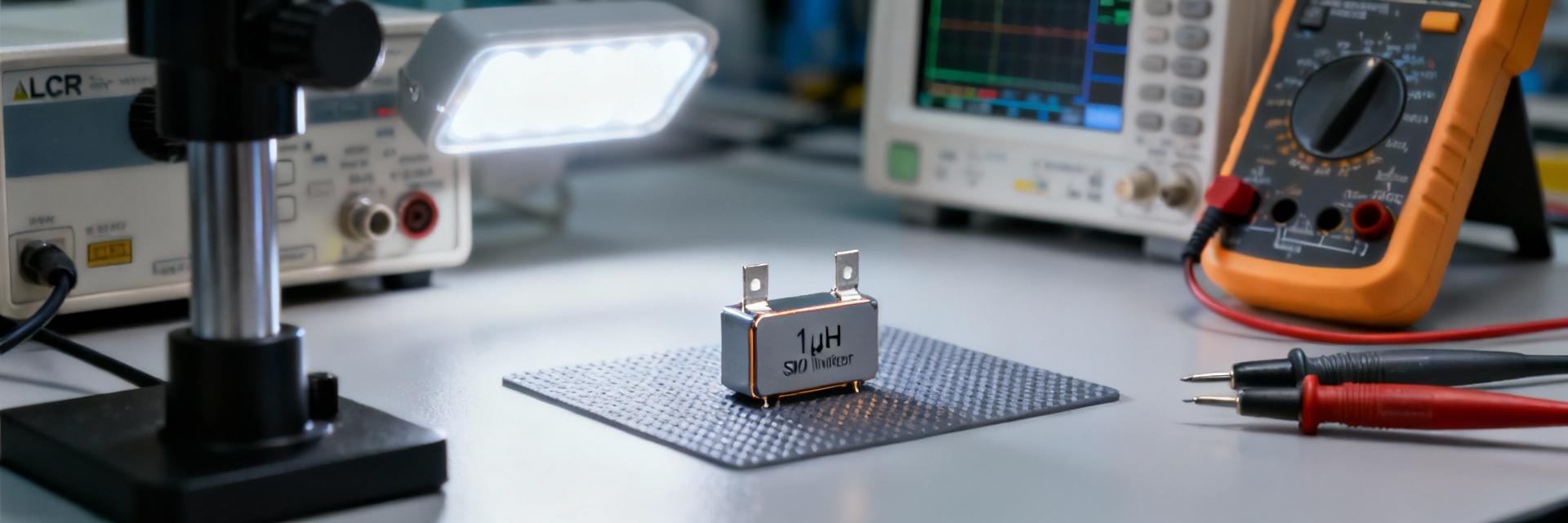
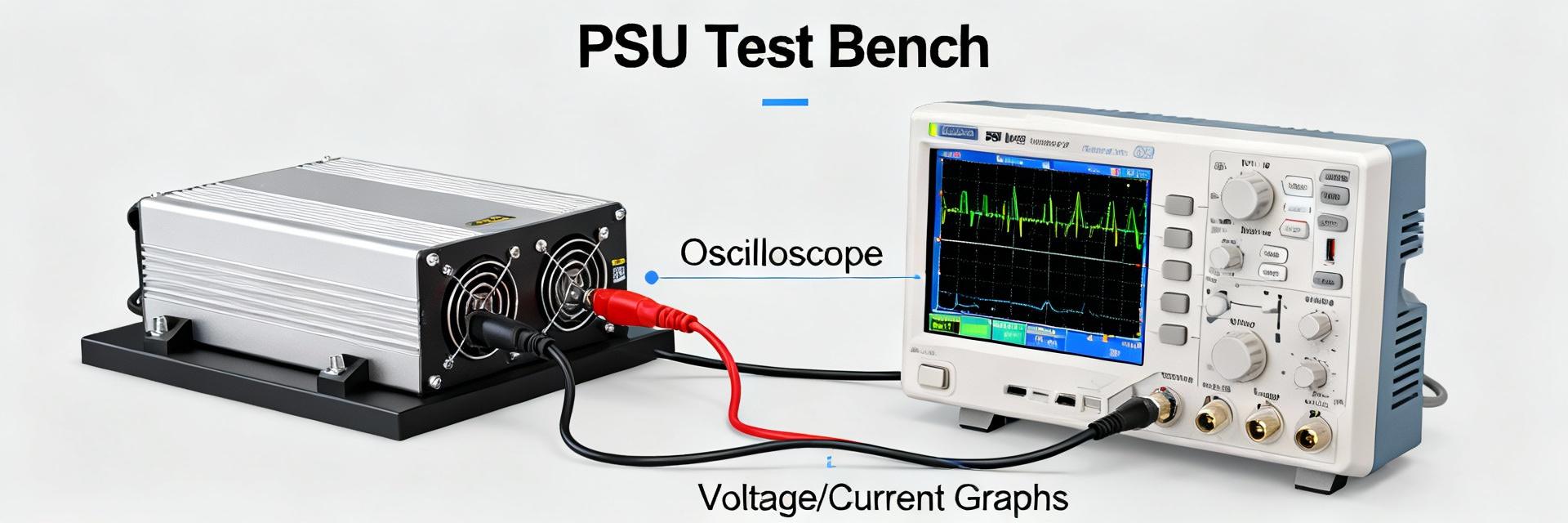
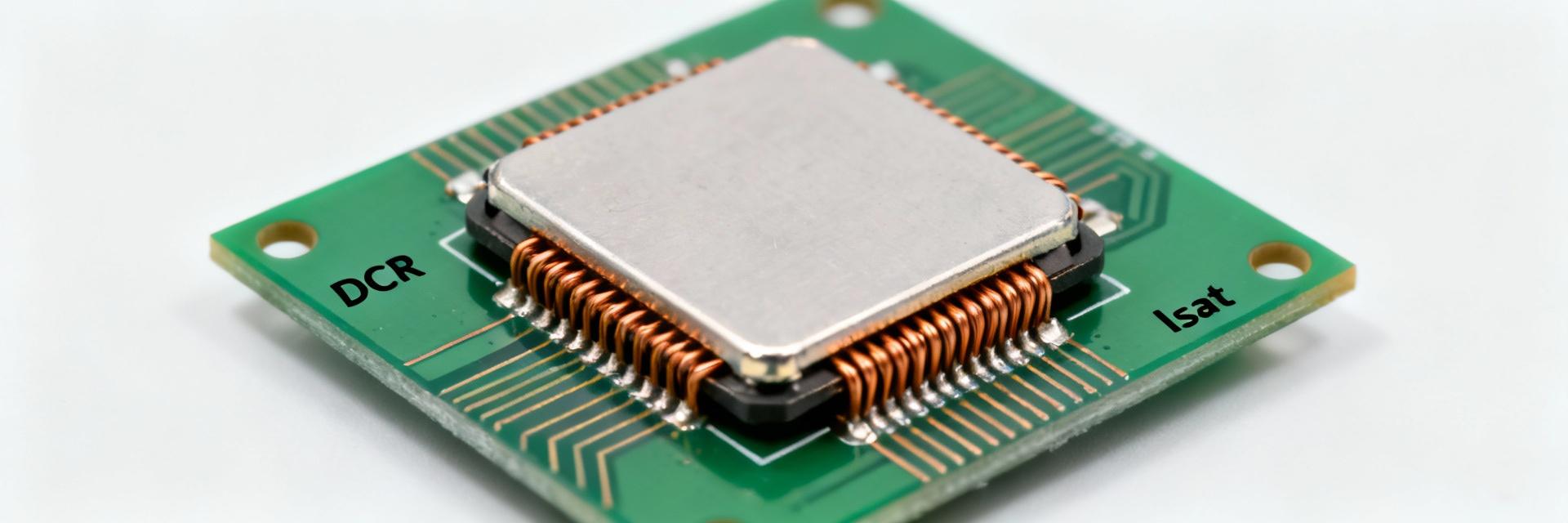
The 7847709101 inductor is a 100 µH shielded SMD power inductor engineered for stability. Featuring a self-resonant frequency (SRF) near 4.7 MHz and a typical rated current of 2.2 A, it operates reliably across a wide temperature range from −40 °C to +125 °C.
Inductance
100 µH
Rated Current
2.2 A
SRF (Typical)
4.7 MHz
Temp Range
-40 to +125°C
Readers will find targeted guidance for evaluating inductance under DC bias, DCR-driven losses, SRF constraints, and PCB/assembly effects so that prototypes meet stability, EMI, and thermal requirements. The data points provided above set expectations for when this 100 µH part is appropriate and when alternative topologies or parts are required.
Product Overview & Core Specs (Background)
Primary Electrical Specifications — What to List and Why
Point: Key specs to collect include inductance (100 µH), tolerance, test frequency (commonly 100 kHz), DCR (typical and max), rated current vs. saturation current, SRF (≈4.7 MHz), and recommended operating frequency ranges.
Evidence: These values determine ripple behavior, losses, and usable frequency band.
Explanation: For power and filter designs, inductance and tolerance set ripple magnitude, DCR sets I²R loss and thermal rise, rated current and saturation define usable bias, and SRF marks the upper limit for effective inductive behavior.
Mechanical, Packaging & Environmental Specs
Capture package dimensions, SMD mounting style, shielding presence, core material (typical NiZn ferrite), maximum operating temperature, and any industrial/automotive ratings. For reliable boards, ensure pad geometry supports adequate solder fillet and thermal vias if high dissipation is expected; shielding reduces stray coupling and helps EMI performance, while core material informs permeability changes with temperature.
Frequency Behavior & Measured Performance Data
Impedance, SRF, and Frequency Response
Expected impedance rises with frequency until the SRF (~4.7 MHz), after which capacitive behavior dominates. Performance data should include magnitude and phase across a sweep that brackets SRF (e.g., 10 kHz–20 MHz). Record impedance and phase with a VNA or impedance analyzer; these traces show the usable band for filtering and whether the part provides sufficient reactance at switching harmonics.
Inductance Retention vs. DC Bias (Estimated)
Figure: Typical saturation curve representation
Thermal Behavior & Current-Handling Analysis
| Parameter |
Condition |
Typical Value/Result |
| DCR (Copper Loss) |
20°C Ambient |
~0.25 Ω |
| Power Dissipation |
@ 2.2 A Load |
~1.21 W |
| Temp Rise (ΔT) |
Still Air, PCB Mount |
≈ +36 °C |
Saturation Current & Reliability: Distinguish rated current (acceptable ∆T) from saturation current (L collapse). Design margins should avoid the saturation knee; for switching stages, use a part with saturation current ≥ 1.2–1.5× peak converter current to preserve inductance and thermal headroom.
Measurement Methods & Test Setups
Lab Procedures
- •Standardize LCR/VNA settings (100 kHz).
- •Use low excitation (10–50 mV) for L.
- •Apply DC bias via dedicated source.
PCB Layout Effects
- •Place inductor near switch node.
- •Utilize thermal vias for cooling.
- •Avoid parasitic capacitance near SRF.
Design Integration & Selection Checklist
Application Rule: This 100 µH part is best suited for low-frequency filters, EMI suppression, or low-current power stages. It is not suitable for high-current (e.g., 10 A) buck converters at high switching frequencies.
Verify Inductance under DC Bias
Confirm SRF > Switching Harmonics
Compute Power Loss (I²R)
Check Solder Profile & Package Spec
Field Use Case & Troubleshooting
For a 2–3 A power stage, the part may be marginal; at 5 A, it is undersized. Prototype checklist: Measure L vs. bias, check temperature at steady load, and validate EMI at harmonics. Common failure symptoms include audible noise or excessive heat. Mitigations: Increase current rating, improve heatsinking, or relocate the component for better airflow.
Frequently Asked Questions
What are the critical specs to check on the 7847709101 inductor before design?
Check inductance at the datasheet test frequency, DCR (typical and max), rated vs. saturation current, SRF, and maximum operating temperature. Also measure L vs. DC bias and verify thermal behavior on the target PCB to ensure reliability under expected loads.
How should I measure SRF and impedance for performance data?
Use a VNA or impedance analyzer to sweep from below the intended operating band up past SRF (e.g., 10 kHz–20 MHz). Capture magnitude and phase, logging the peak impedance and SRF. Use a calibrated fixture and subtract parasitics for accuracy.
Is the 7847709101 inductor suitable for a 10 A buck converter?
Not directly. With a typical rated current near 2.2 A and lower saturation limits, it is undersized for 10 A applications. For high-current bucks, select an inductor with higher saturation current, lower DCR, and verified thermal margin.
Summary Overview
-
[✓]
Provides 100 µH with SRF ≈ 4.7 MHz and 2.2 A rated current; assessment of DC bias and DCR losses is mandatory for stability.
-
[✓]
Key metrics: Inductance at test frequency, DCR, saturation current, and SRF must be part of production acceptance testing.
-
[✓]
For high-current/high-frequency switch-mode applications, use the selection checklist to verify derating and thermal paths before qualification.