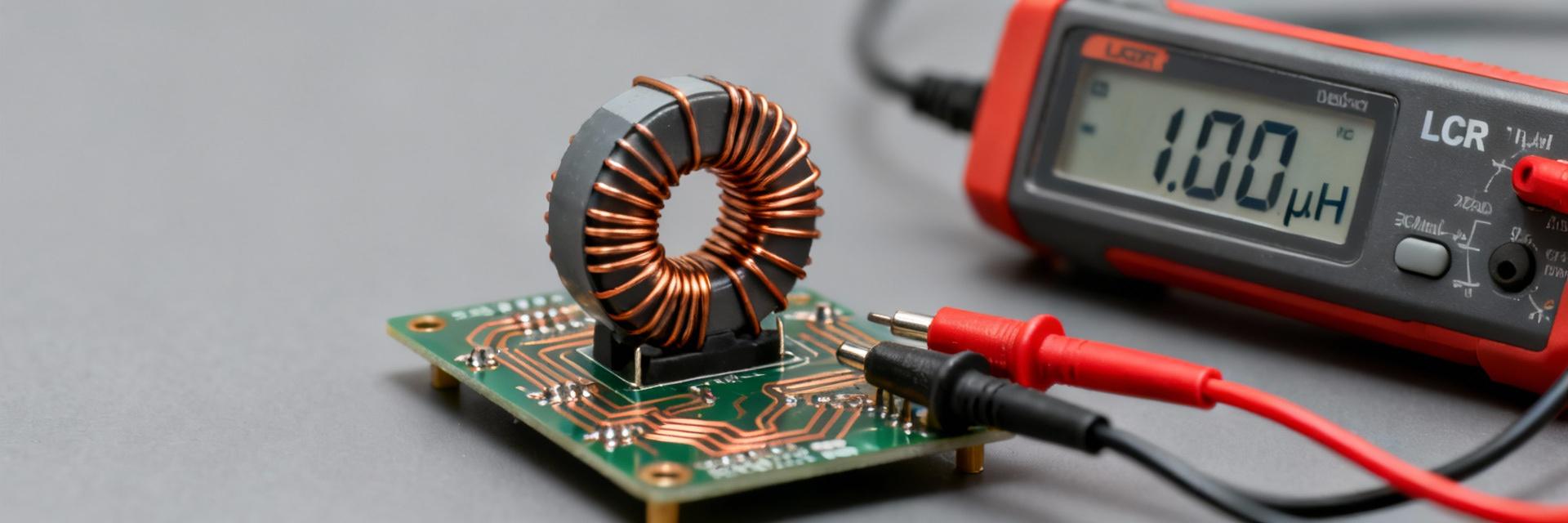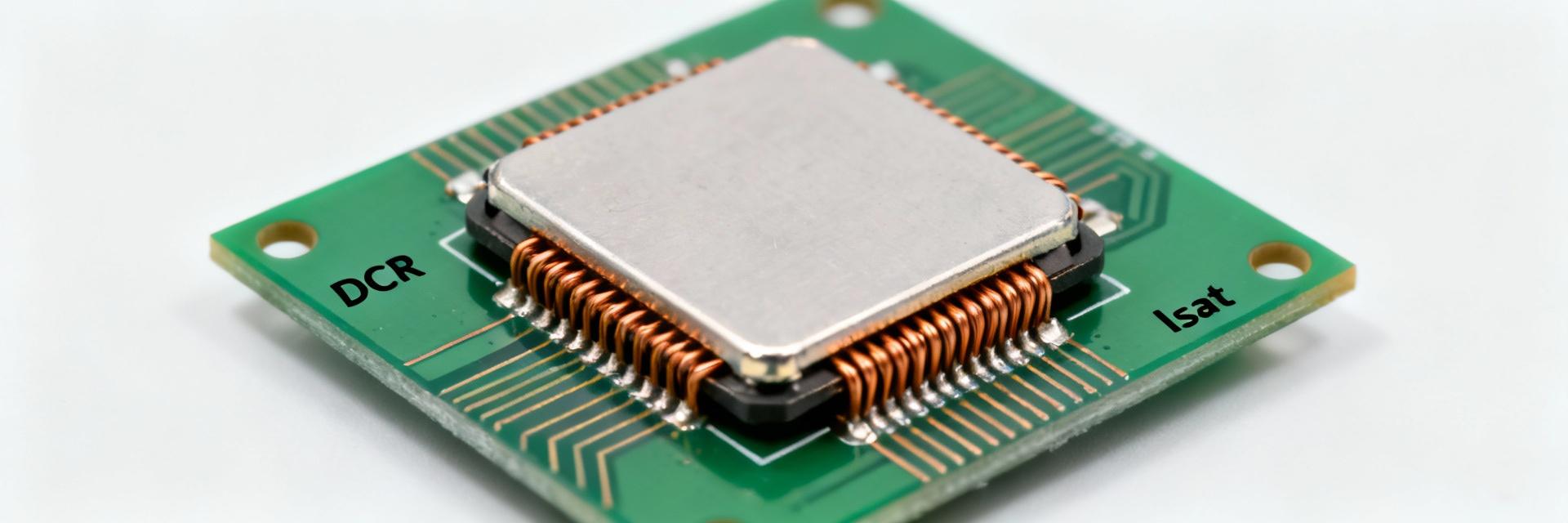
The 78477520 inductor is engineered for precision power-conversion and filtering. With a nominal inductance of 100 µH (±10%) measured at 10 kHz / 100 mV, it balances high energy storage with a compact footprint. Understanding the thermal limit (IR ≈ 0.77 A) and physical saturation (Isat ≈ 0.86 A) is critical for ensuring long-term reliability in buck converters and EMI suppression stages.
| Parameter | Typical Value | Test Condition |
|---|---|---|
| Inductance (L) | 100 µH ±10% | 10 kHz / 100 mV |
| Rated Current (IR) | 0.77 A | ΔT = 40 K |
| Saturation Current (Isat) | 0.86 A | |ΔL/L| < 10% |
| DC Resistance (DCR) | Low-mΩ Range | @ 20°C |
1 — Component Overview & Typical Use Cases
This part fits perfectly into roles where modest current meets the need for significant noise attenuation. Common scenarios include:
- EMI Suppression: Acting as a high-impedance barrier in LC filters to block switching noise.
- Low-Power Buck Converters: Providing stable energy storage for step-down regulators operating under 1A.
- Input Filtering: Smoothing DC rails in sensitive industrial sensors.
2 — Electrical Specs & Test Context
The 100 µH rating is context-dependent. Manufacturers use 10 kHz to minimize core nonlinearity, but designers should expect inductance to shift under high-frequency switching. The Self-Resonant Frequency (SRF) defines the upper bound; if your converter operates near the SRF, the component may behave capacitively, compromising the filter performance.
3 — Current Handling & Thermal Behavior
There is a vital distinction between Rated Current (IR) and Saturation Current (Isat). IR is a thermal boundary—exceeding it causes the component to overheat and potentially degrade the PCB. Isat is a magnetic boundary—exceeding it causes a sharp drop in inductance, which can lead to runaway peak currents in power ICs. Always design with a 10-20% safety margin for both.
4 — Implementation & Validation
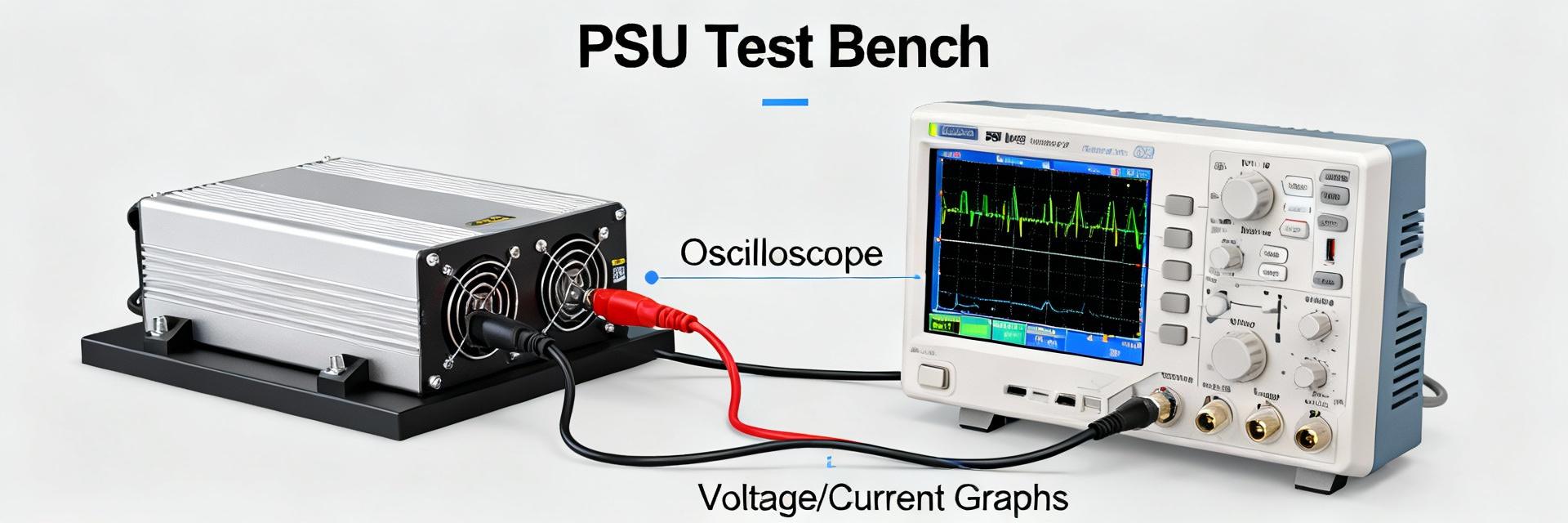
For successful integration, prioritize PCB thermal management. Use wide copper pours to sink heat away from the inductor terminals. During bench testing, use a thermal camera to identify hotspots and verify the 40K temperature rise claim under your specific ambient conditions and airflow.
Summary
- Core Specs: 100 µH, 0.77A Rated, 0.86A Saturation.
- Efficiency: Check DCR to minimize I²R losses in continuous conduction mode.
- Safety: Derate current for high-ambient industrial environments.
FAQ
How does the 78477520 inductor’s IR differ from Isat?
IR is the continuous current rating tied to an allowable temperature rise (ΔT basis), while Isat is the current at which inductance falls to a specified fraction under DC bias. Use IR to avoid overheating and Isat to ensure your operating current preserves enough inductance.
What bench tests should I run on a power inductor?
Run L vs. DC-bias sweeps, impedance vs. frequency, DCR before and after reflow, and thermal imaging under expected ripple/current to validate performance in your specific circuit layout.
How should I derate the rated current for real-world conditions?
Derate IR by 10–30% depending on copper area, airflow, and enclosure. Use thermal imaging on a functioning board to confirm ΔT under realistic ripple current and ambient heat loads.
Why is the 78477520 tested at 10 kHz?
The 10 kHz/100 mV standard provides a stable baseline to compare inductance without the interference of core losses found at higher frequencies, though you must verify SRF for HF applications.