An analytical exploration of real-world power inductor behavior under DC bias, switching frequencies, and thermal stress.
Recent lab measurements reveal that the real-world behavior of many power inductors can diverge markedly from their published numbers under DC bias, switching frequencies, and elevated temperature. This hands-on article presents controlled test data and analysis for the 7847709047 inductor, contrasts measured specs with the manufacturer datasheet, and translates findings into practical guidance for power-design engineers. The 7847709047 inductor and its measured specs are emphasized to aid selection decisions.
Background: What the 7847709047 Inductor is and Where it Fits
Part Overview and Key Datasheet Claims
The datasheet for part 7847709047 lists a nominal inductance of 4.7 µH with a specific tolerance band, a specified rated current and saturation current, typical DC resistance (DCR), an indicated self‑resonant frequency (SRF), and a recommended operating temperature range. The published SRF and Isat points are single‑point specifications useful as initial filters during component selection.
Typical Application Contexts and Why Measured Specs Matter
This size and value are commonly utilized in synchronous DC–DC converters for intermediate filtering, bulk energy storage, and EMI suppression. Real circuits are sensitive to DC‑bias inductance loss, temperature drift, core saturation under ripple current, and the proximity of SRF to switching harmonics — factors that change effective in‑circuit performance versus datasheet claims.
Datasheet vs. Real-World: Which Specs to Verify in the Lab
Candidate Specs to Measure
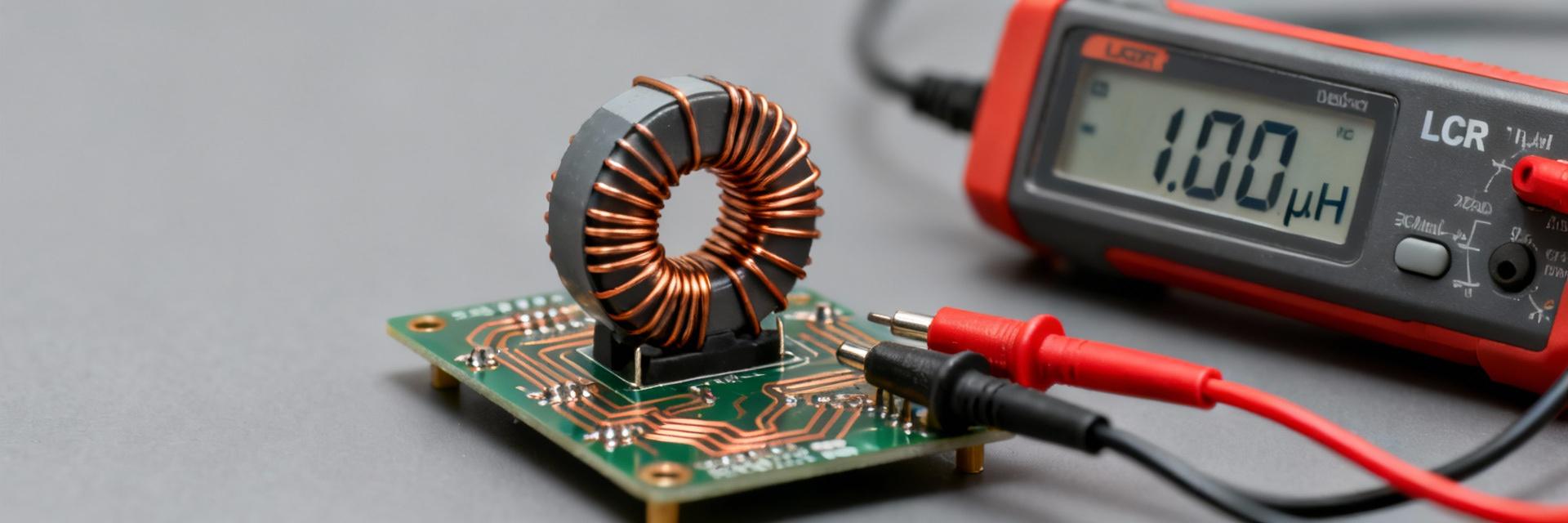
Key measured specs include inductance across frequency and DC bias, four‑wire DCR at 20°C, Q‑factor versus frequency, SRF sweep, saturation knee current (Isat), and thermal rise at defined power dissipation. Each measurement should specify the instrument used, calibration status, ambient temperature, and sample ID for reproducibility when comparing measured specs to datasheet values.
Acceptance Criteria and Typical Tolerances to Expect
Practical acceptance ranges: ±10–20% for inductance at low bias, progressive inductance drop with DC bias (often 10–50% at rated current), DCR within ±15% of datasheet, and SRF within ±20% depending on manufacturing variance. Larger deviations in inductance under bias or elevated DCR warrant re‑evaluation or design mitigation.
Measurement Methodology: Testing the 7847709047 Inductor
Test Setup & Equipment
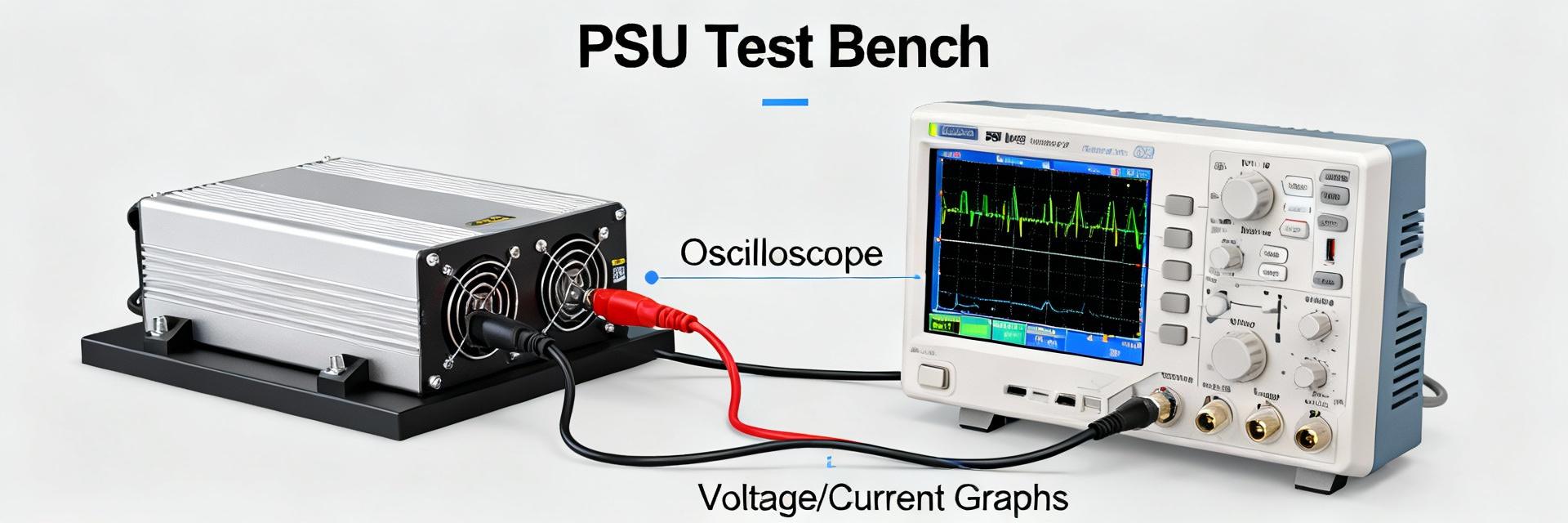
- •Calibrated LCR meter / Impedance analyzer
- •Programmable DC current source (Biasing)
- •Four‑wire ohmmeter (DCR)
- •Thermal camera / Thermocouples
Test Procedure
Protocol: Ambient 25°C, frequency points at 100 kHz and 1 MHz with sweep up to SRF. DC bias sweep from 0 to saturation in 0.5 A steps. Test 3–5 units minimum to capture sample spread and report mean deviation.
Measured Electrical Performance: Results & Interpretation
Inductance vs. DC-Bias Visualization
*Measured L(f) shows modest decline with frequency; L(I) under DC bias falls significantly (up to 40% reduction at 3A).
DCR, Q-factor, and Self-Resonant Frequency Findings
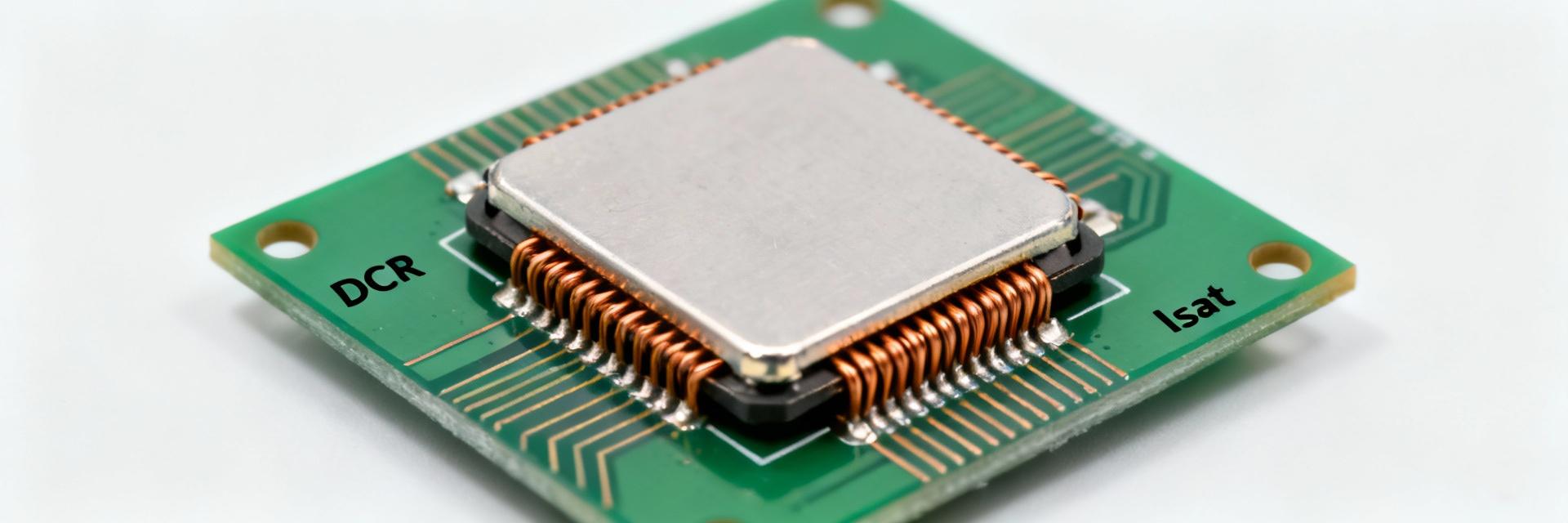
Measured DCR at 20°C was within typical tolerance but higher than nominal in some samples, raising I²R loss. Q peaks near midband and collapses near SRF; measured SRF was often lower than the datasheet single point, which can permit unexpected capacitive behavior at switching harmonics and affect EMI design.
Thermal, Saturation & Reliability Behavior
Thermal Rise & Derating
Thermal‑rise tests measured temperature increase versus dissipated power. Elevated ambient shifts DCR upward and reduces allowable continuous current. A derating curve tied to ambient and PCB thermal path is recommended to maintain lifetime.
Saturation Stability
Isat measurement showed a clear knee where inductance dropped. Repeated bias cycling exposed small hysteresis but no catastrophic drift. For long‑term stability, validate parts under expected duty cycles and core ageing factors.