Engineers optimizing power rails prioritize high-density components with predictable saturation. The SPM5015T-3R3M-CA, a 3.3 µH shielded inductor, is engineered for compact buck converters and point-of-load (POL) modules. This guide provides a lab-ready breakdown of electrical parameters, validation methods, and PCB layout strategies to ensure reliable performance under high-current switching.
1 — Quick Product Overview & Typical Use Cases
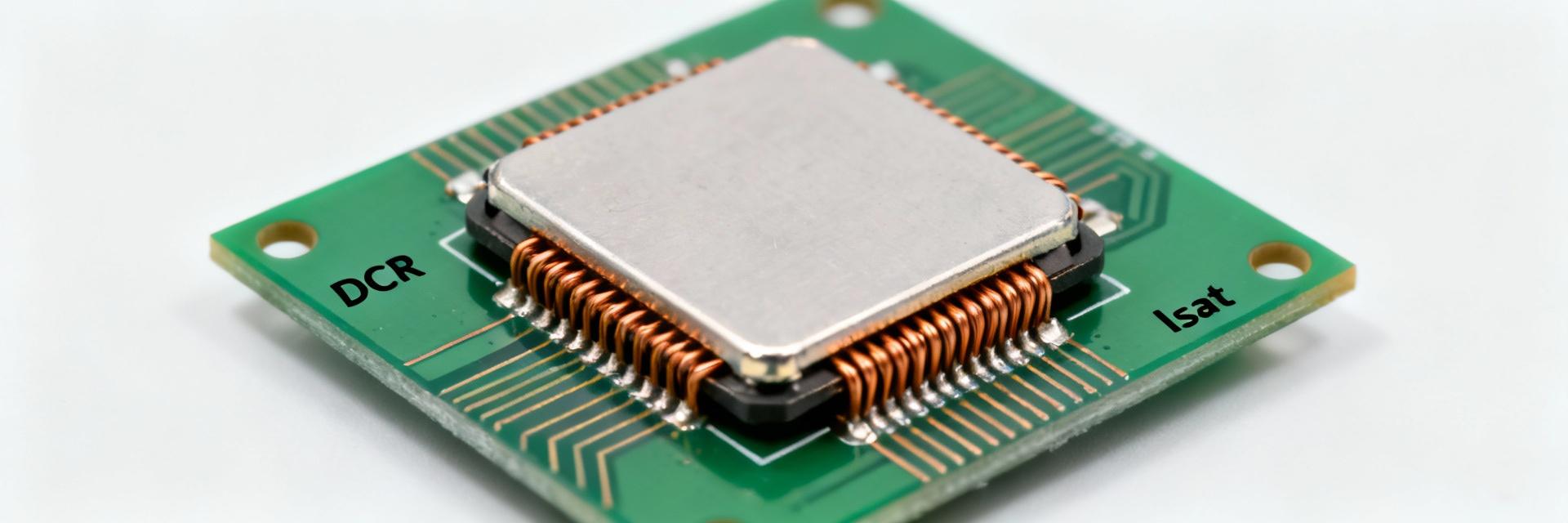
The SPM5015T series utilizes a metallic magnetic material that offers superior DC-bias characteristics compared to traditional ferrite cores. Its low-profile SMD footprint is optimized for automated high-speed assembly and space-constrained designs.
- Synchronous buck converters (200 kHz – 3 MHz)
- High-current processor power rails
- Industrial POL modules with limited airflow
2 — Key Electrical Specs: Datasheet Breakdown
| Parameter | Datasheet (Guaranteed) | Test Condition |
|---|---|---|
| Inductance (L) | 3.3 µH ±20% | 100 kHz, 0.1 Vrms |
| DC Resistance (DCR) | 25 mΩ (Typ) / 40 mΩ (Max) | 25 °C, 4-Wire Method |
| Rated Current (Isat) | 3.5 A (Typ) | L-drop ≤ 30% |
| Rated Current (Itemp) | 3.2 A (Typ) | ΔT = 40°C Rise |
| SRF | >10 MHz | Impedance Analyzer |
3 — Recommended Test Methods & Lab Setup
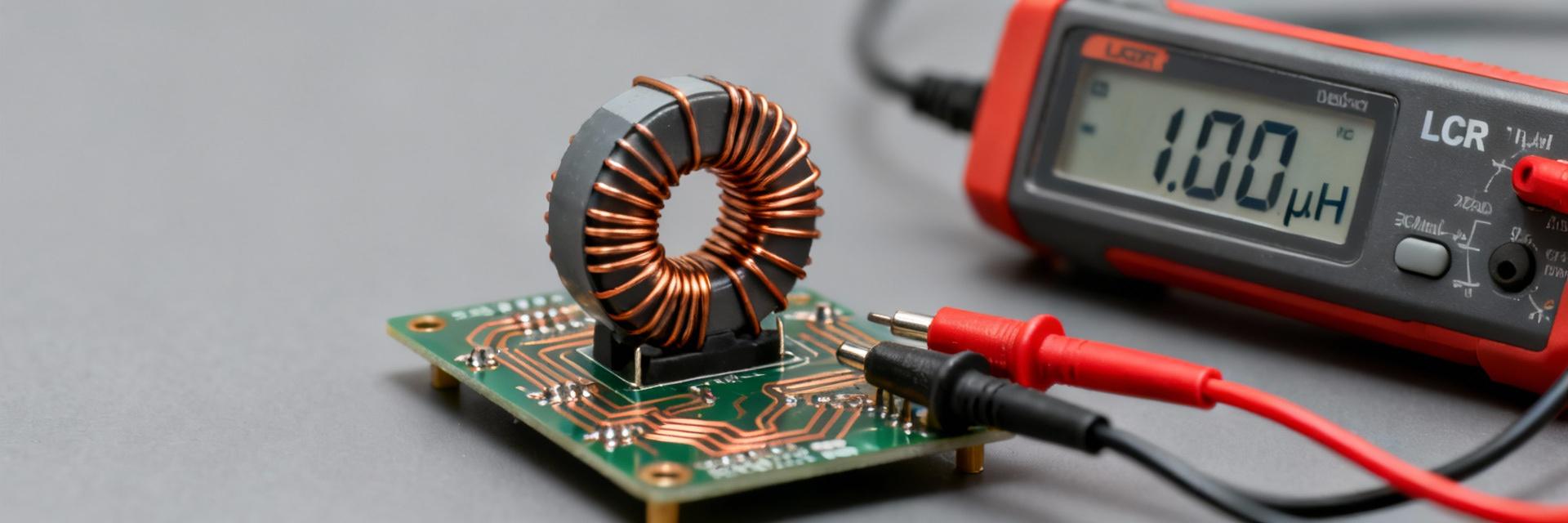
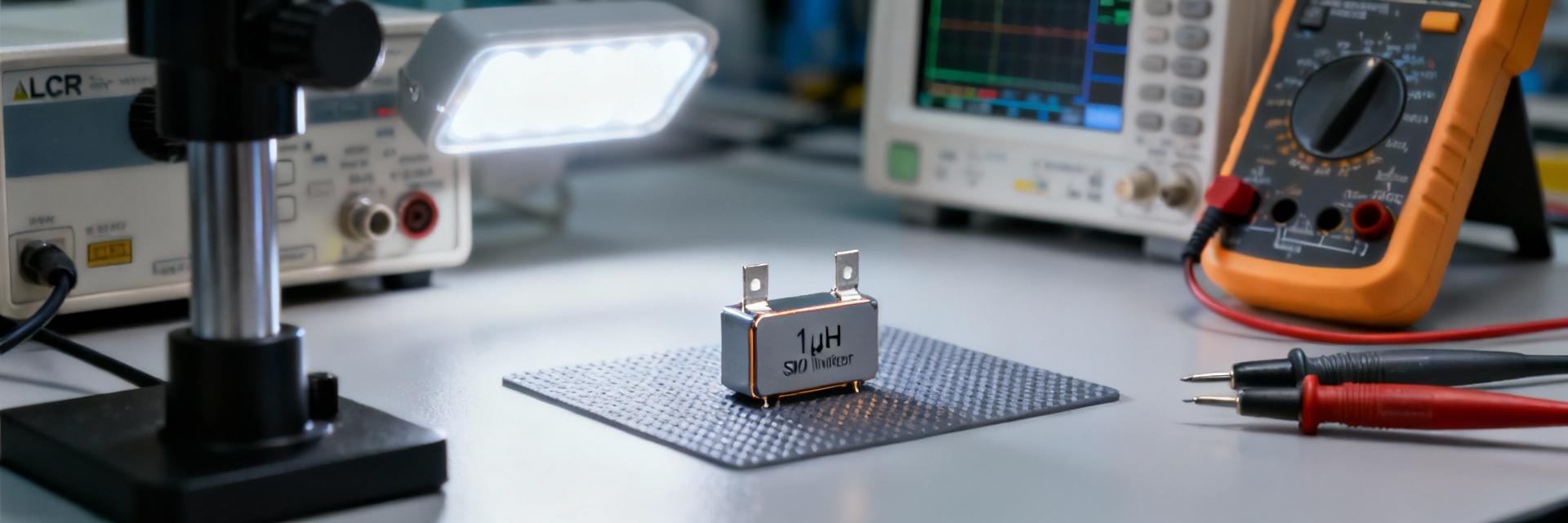
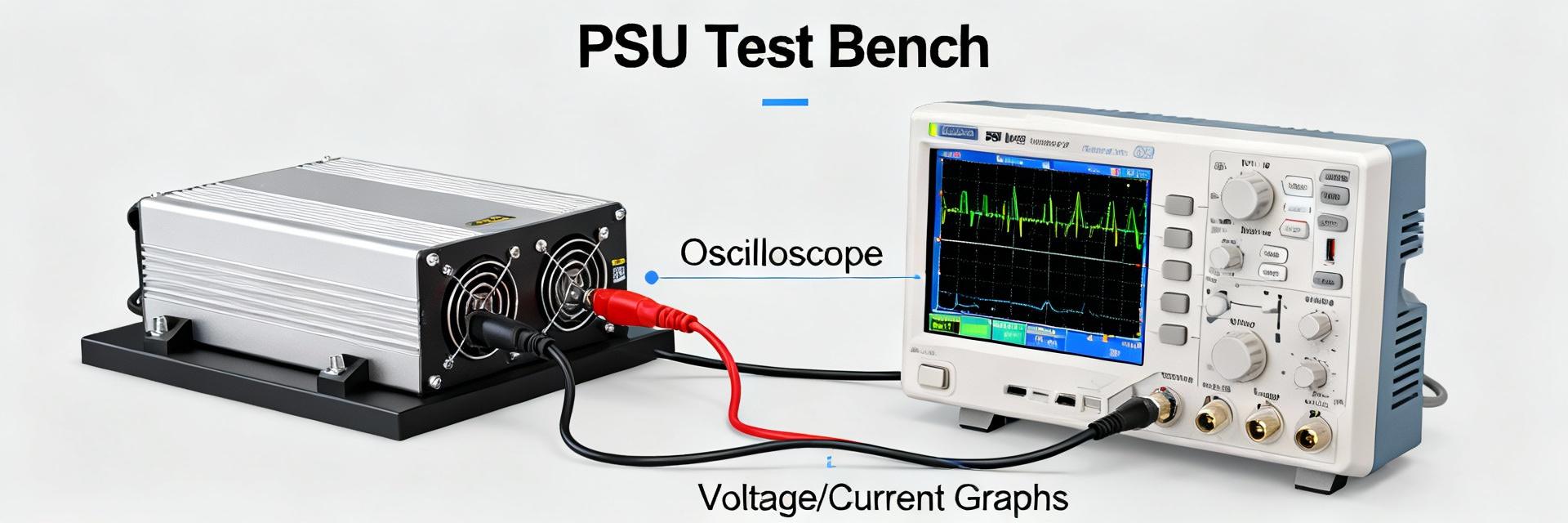
To validate the SPM5015T-3R3M-CA, engineers must account for fixture parasitics. A calibrated LCR meter is essential for baseline inductance, while a high-precision DC power supply and electronic load are required for saturation testing.
Validation Checklist:
- DCR Measurement: Always use a Kelvin (4-wire) probe setup to bypass lead resistance.
- L vs. DC Bias: Sweep current from 0A to 5A in 0.5A increments to map the saturation curve.
- Thermal Profiling: Attach a Type-K thermocouple to the center of the inductor body during full-load testing.
4 — Example Test Data & Analysis
| Metric | Datasheet Target | Lab Measurement (Sample) |
|---|---|---|
| Inductance @ 0A | 3.3 µH | 3.28 µH (Pass) |
| DCR @ 25°C | < 40 mΩ | 28.4 mΩ (Pass) |
| L @ 3.5A Bias | > 2.31 µH | 2.28 µH (Borderline) |
| Case Temp @ 3A | < 65°C | 58.2°C (Pass) |
5 — PCB, Thermal, and Reliability Checklist
Performance in the field depends heavily on the PCB environment. Because the SPM5015T series uses a molded structure, thermal dissipation occurs primarily through the terminals into the copper planes.
- Copper Pour: Maximize the copper area connected to both pads to act as a heatsink.
- Thermal Vias: Place vias near the pads to transfer heat to internal ground/power planes.
- EMI Shielding: Keep sensitive signal traces away from the inductor’s "switch node" terminal to minimize capacitive coupling.
Summary
The SPM5015T-3R3M-CA is a robust solution for high-density power conversion, provided saturation and thermal margins are respected. Success in design-in requires verifying L-change under peak DC bias and ensuring PCB thermal management supports the multi-amp requirements.