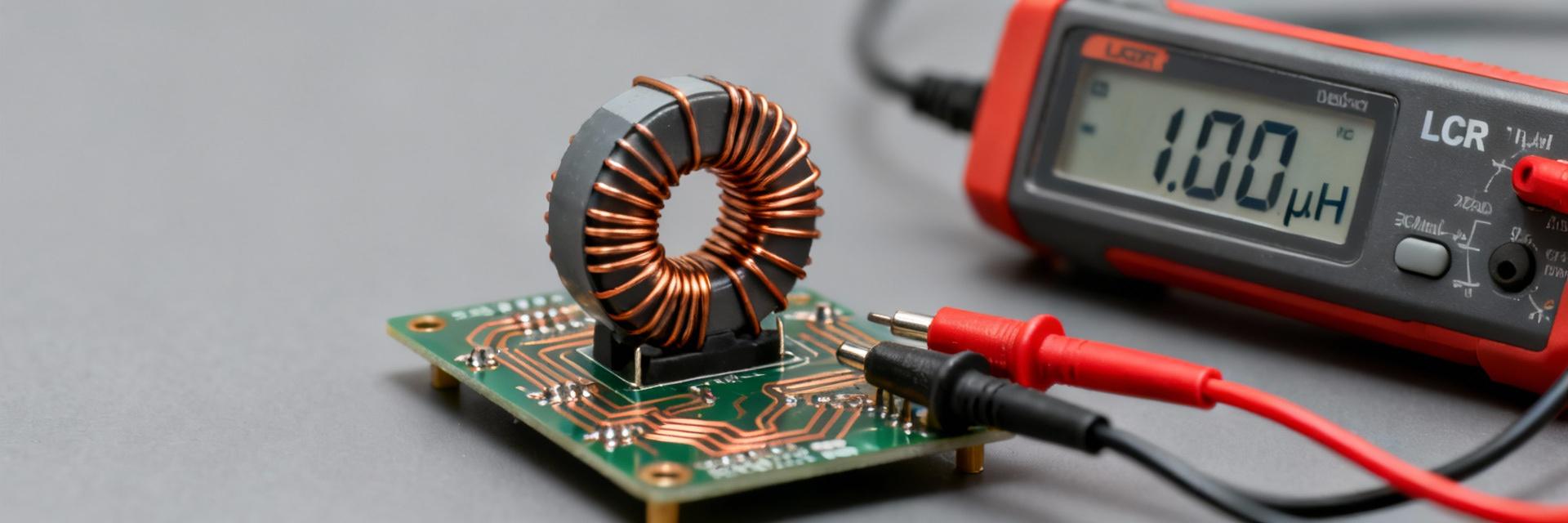
Compact SMD power inductors in this family typically specify 4.7 μH inductance, ±20% tolerance, a rated DC current near 1.8 A and DC resistance on the order of 200 mΩ — numbers that directly determine converter efficiency and thermal headroom.
1 — Product Overview and Form Factor

Form Factor & Package Details
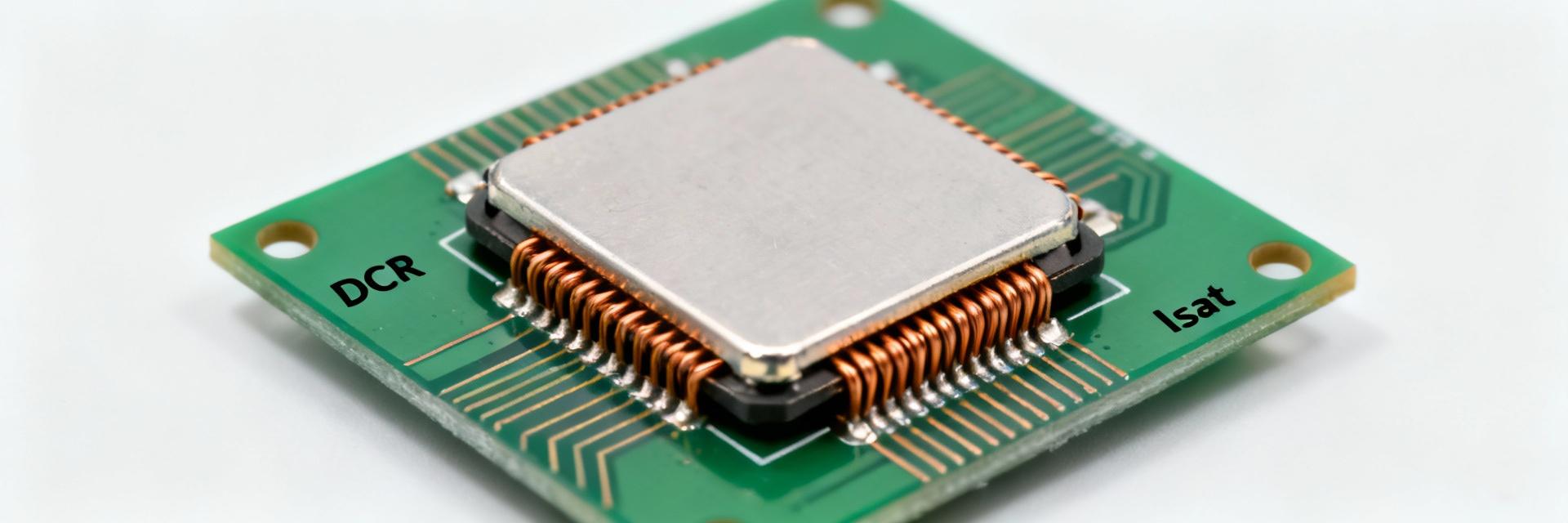
The part is an SMD power inductor in a compact molded package. Designers should extract drill/via keepout areas from the mechanical drawing before layout, as exact pad pitch and height determine placement and reflow profiles.
Typical Application Spaces
This inductor targets low-voltage buck converters and power filtering for 1–3 A rails. The 4.7 μH value balances ripple filtering and board-area constraints at common switching frequencies between 200 kHz and 2 MHz.
2 — Key Electrical Specifications
| Parameter | Typical Value | Test Condition |
|---|---|---|
| Inductance | 4.7 μH | 100 kHz, 0 A |
| Tolerance | ±20% | Standard |
| DCR | 200–210 mΩ | Room Temp (25°C) |
| Rated Current | ~1.8 A | Thermal Limit |
3 — Current Ratings & Saturation
Rated DC current (thermal) and saturation current (magnetic limit) are distinct. Design practice targets 60–80% of rated current for continuous operation to preserve margin against temperature rise and transients.
4 — Thermal & Reliability
Operating temperature range and derating curves are critical. For PCB thermal budgeting, assume worst-case ambient plus hotspot; size the inductor so the required current falls inside the derated region at expected temperatures.
5 — Selection & Bench Validation
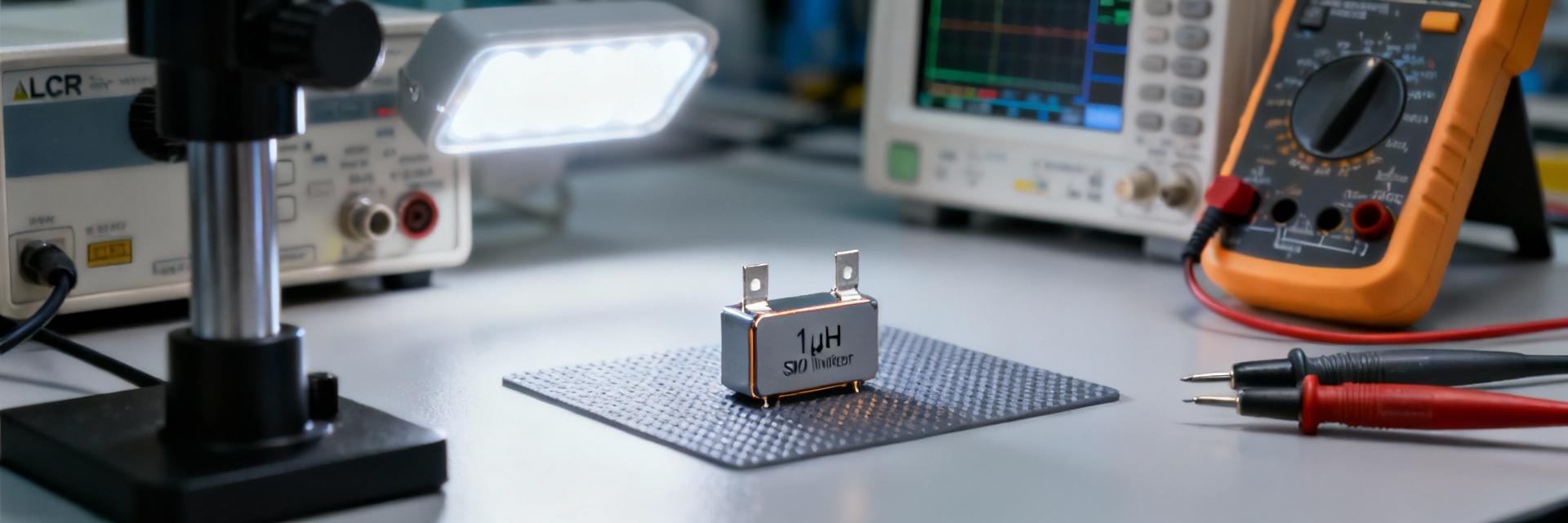
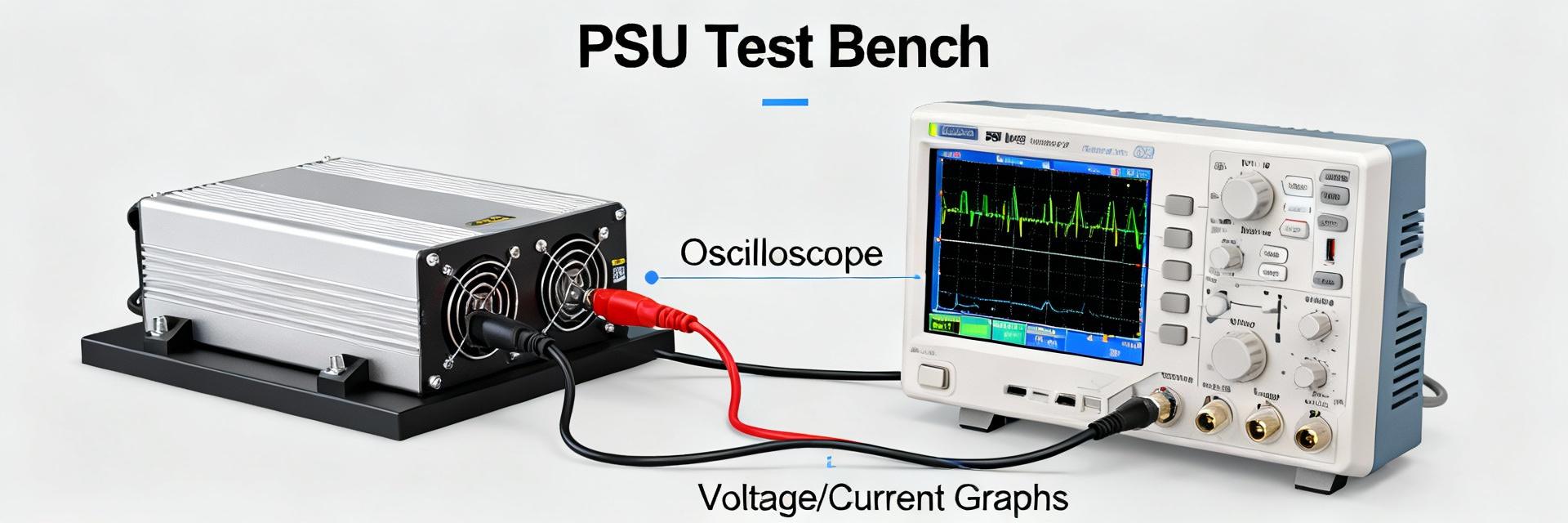
Follow repeatable tests: measure LCR inductance at target bias, verify DCR with a micro-ohmmeter, and perform a thermal run at RMS current. In-circuit ripple capture confirms the theoretical duty cycle calculations.
Summary
The SPM4015T-4R7M-CA's core specs—4.7 μH, 200 mΩ DCR, and 1.8 A rating—determine the ripple and thermal margin of the power stage. Engineers must validate saturation and I²R losses on the bench before production commitment.
Frequently Asked Questions
How should engineers verify inductance under DC bias?
Use an LCR meter capable of applying a DC bias or an external programmable DC source with the meter measuring incremental inductance. Record inductance at expected operating DC currents and compare to datasheet bias curves; document the measurement method and sample variation for production acceptance.
What pass/fail criteria are recommended for DCR and thermal tests?
Set DCR pass threshold at or below datasheet typical plus allowance (e.g., ≤ datasheet max). For thermal, require no excessive temperature rise or DCR drift beyond a preset percentage after a defined run time at expected RMS current. Log steady-state temperatures and ensure margin to maximum rated temperature.
How to proceed when a part shows earlier saturation than expected?
Confirm measurement setup and repeat the saturation test with slow DC current ramp. If confirmed, either increase headroom by selecting a higher Isat part, reduce peak flux by changing inductance or switching frequency, or adjust duty cycle; validate the alternative with the same bench procedures.
What are the primary application spaces for the SPM4015T-4R7M-CA?
It targets small-to-medium current power domains, including low-voltage buck converters, post-regulators, and input/output power filtering for 1–3 A rails where space and efficiency are primary constraints.