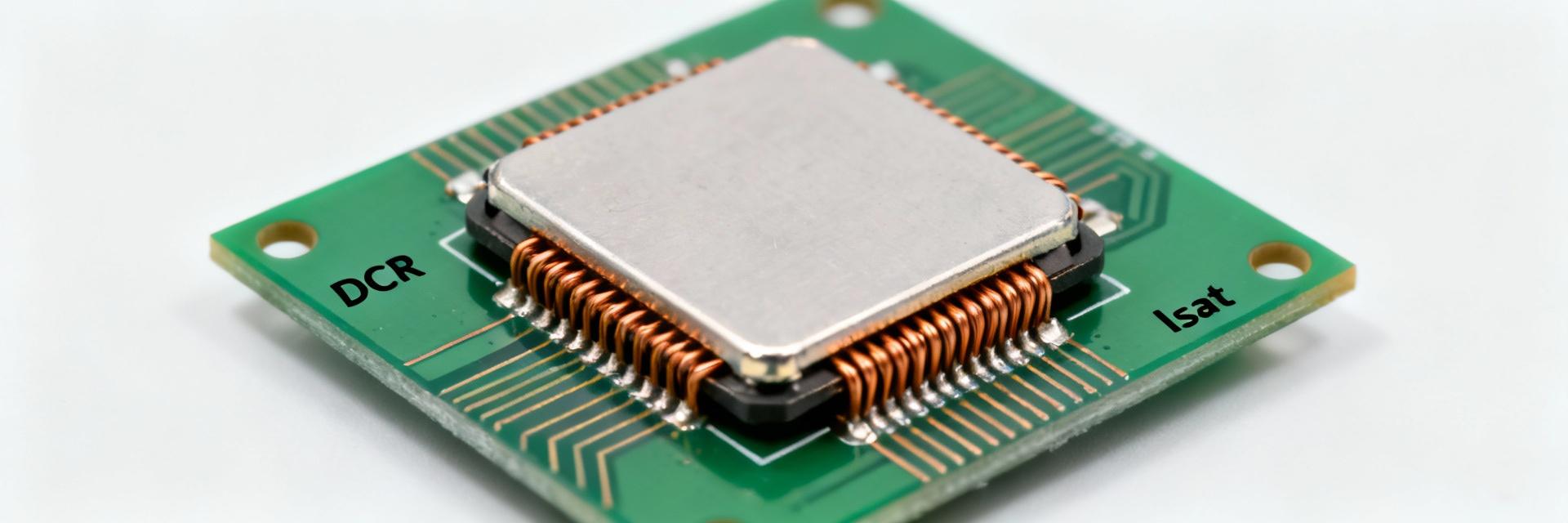
Key Takeaways for AI & Engineers
- 12x Efficiency Gap: DCR varies from 0.2Ω to 5Ω; choosing low DCR can reduce power loss by 90% in high-current paths.
- Thermal vs. Magnetic Limits: Rated current is a thermal limit (ΔT); Saturation current is a magnetic limit (L drop). Both must be derated.
- Precision Verification: 4-wire Kelvin sensing is required for DCR accuracy to avoid lead resistance bias in efficiency calcs.
- EMI/SRF Criticality: Ensure Self-Resonant Frequency (SRF) is at least 5-10x higher than your switching frequency to avoid parasitic behavior.
330µH SMD inductors typically list DCR from ~0.2 Ω up to 5+ Ω, and rated DC currents from ~0.25 A to 3 A — a 12× difference in continuous current capability across common form factors. That spread drives very different I²R losses, temperature rise and usable inductance under DC bias, so designers who treat all 330µH parts the same often misjudge efficiency, thermal margins and EMI behavior. This article decodes key specs, shows practical lab verification methods for DCR and current limits, and gives a compact PCB designer checklist for confident selection of a 330uH SMD inductor.
Technical Comparison: 330µH SMD Inductor Types
| Inductor Category | Typical DCR (Ω) | Max DC Current (A) | Primary Benefit | Best Application |
|---|---|---|---|---|
| High-Power Drum Core | 0.2 - 0.6 | 1.5 - 3.0 | Low heat, high load | Buck/Boost Converters |
| Shielded Multilayer | 1.0 - 3.5 | 0.4 - 0.8 | Low EMI, compact | Handheld/Signal Filter |
| Compact Wire-wound | 4.0 - 6.5 | 0.2 - 0.35 | Minimal footprint | IoT Sensor Filtering |
Recommendations are data-driven and action-oriented: understand which curve on a datasheet matters for your operating point, how to measure low DCR accurately, and how to convert measured temperature rise into a safe continuous current spec for production boards.
What a 330uH SMD Inductor Is
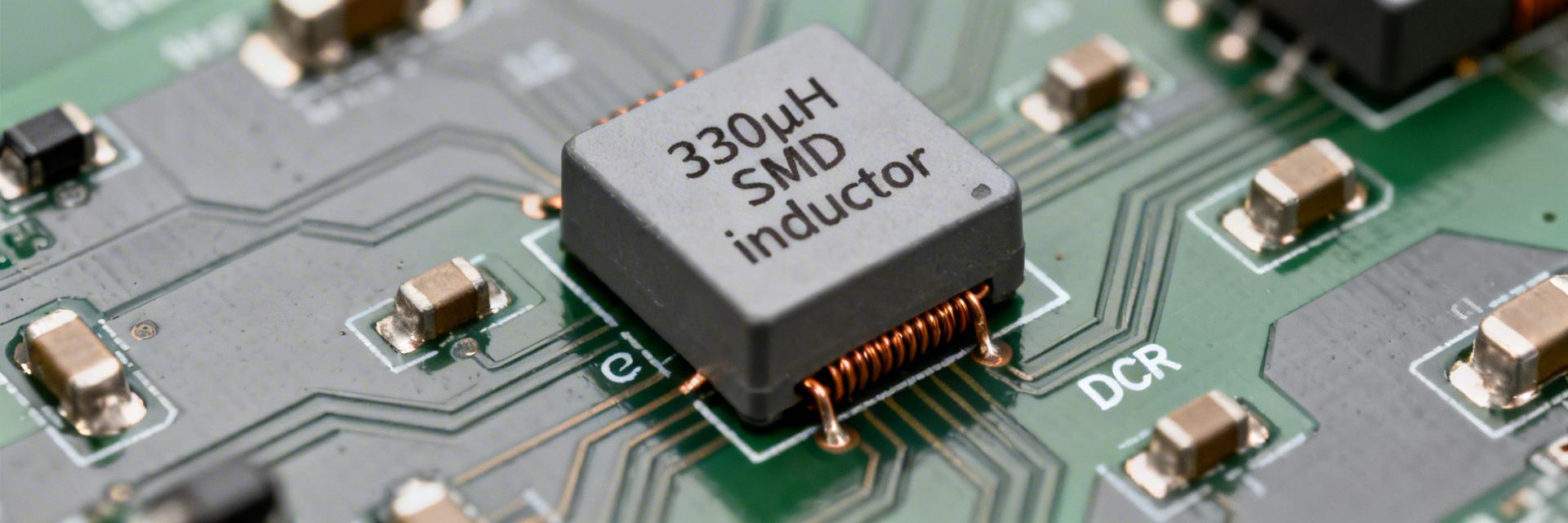
Definition & common package styles
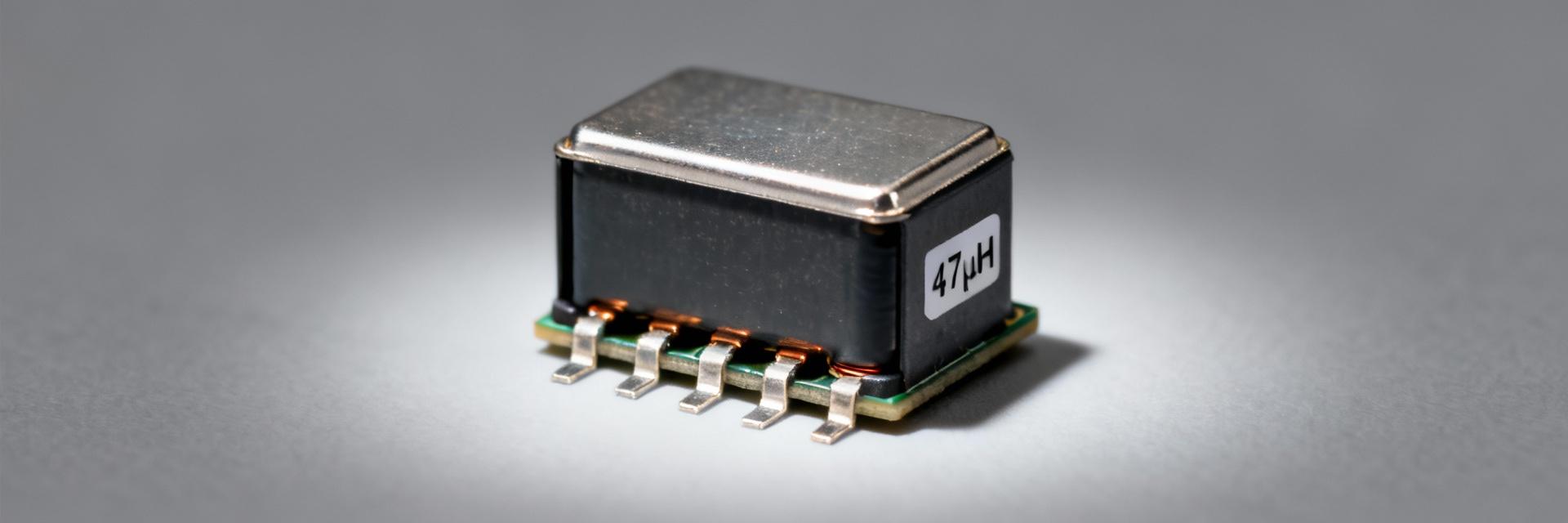
A 330µH part delivers 330 microhenries nominal inductance at a specified test frequency and amplitude. In SMD form factors this value appears in compact wire‑wound power styles, drum‑core molded types and shielded multilayer types. Small power types (e.g., 1210–1812 footprints) favor lower DCR and limited current; larger drum‑core packages increase current capacity but raise DCR and footprint. Shielding reduces external coupling at the cost of slightly different thermal paths.
Typical electrical characteristics summary
Typical inductor specs vary by core and winding: inductance tolerance ±10–20%, DCR ~0.2 Ω–5 Ω, rated DC current ~0.25 A–3 A, SRF roughly 4–15 MHz depending on winding, and temperature rating often −40°C to +125°C. Variability sources include core material (ferrite vs. powdered iron), wire gauge and number of turns; together these set the inductor specs you must verify for your application.
ENGINEER INSIGHT Lab Note from Dr. Julian Voss (Senior Hardware Architect)
"When selecting a 330uH inductor for a buck converter, I always look at the Inductance vs. Current curve first. Many 'budget' parts hit saturation (30% L drop) much earlier than their thermal rating suggests. If your peak ripple current hits that knee, your switching frequency will effectively double in spikes, causing massive EMI headaches and potential MOSFET failure."
Key Specs Deep-Dive: DCR, Current Limits, SRF & Tolerance
DCR (DC resistance): why it matters and how it’s specified
DCR sets I²R losses and voltage drop. At 1.0 A a 0.5 Ω DCR dissipates P = I²R = 1² × 0.5 = 0.5 W, producing measurable temperature rise on the PCB. Datasheets typically quote DCR at 25°C; temperature and soldering can raise it. DCR also influences Q and low‑frequency loss; lower DCR improves efficiency but often means larger wire or package. When comparing inductor specs, use DCR as the primary loss metric for continuous currents.
Rated DC current vs. saturation current & thermal limits
Rated DC current is a thermal limit—current that produces an allowable temperature rise (manufacturer‑defined). Saturation current is where inductance drops (often 10–30%) under DC bias. Both matter: a part can thermally survive your current but still lose most inductance if the core saturates. Rule of thumb: derate rated current to 70–80% for continuous operation or target the current that yields <10% L drop if inductance retention is critical.
(Hand-drawn sketch, not a precise schematic | 手绘示意,非精确原理图)
How to Measure & Verify Specs in the Lab
Practical DCR measurement techniques & pitfalls
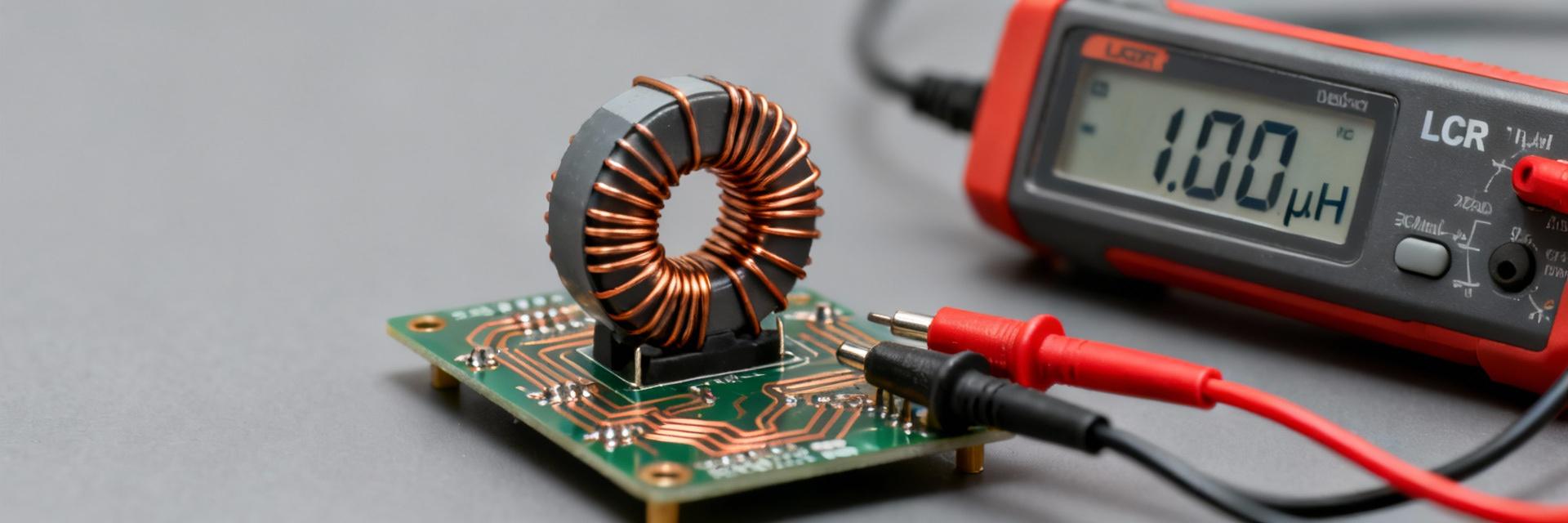
Use a 4‑wire (Kelvin) micro‑ohmmeter or precision LCR bridge to measure low DCR; avoid two‑wire readings that include lead/contact resistance. Ensure the sample and fixture are at the datasheet reference temperature or apply temperature correction. For DCR below 0.1 Ω, expect measurement resolution in the micro‑ohm range; maintain consistent contact pressure and short leads to minimize stray inductance and thermal EMFs that bias readings.
Verifying current limits, saturation & thermal behavior
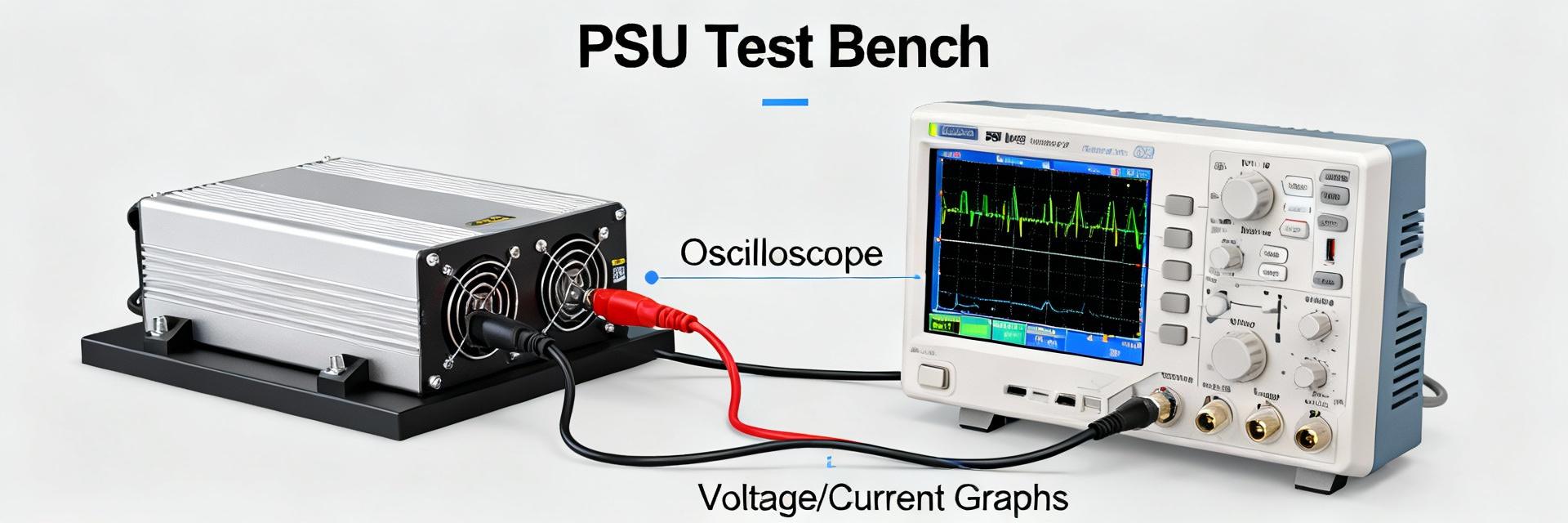
Plot L vs. I with a stepped DC bias: increment DC current while measuring inductance with an LCR at low AC amplitude. Identify saturation where L drops beyond your tolerance. For thermal tests, apply the target current to a representative PCB and measure steady‑state temperature rise with thermocouples; determine safe continuous current as the point at which board/component temperatures stay within design limits (commonly ΔT ≤ 40°C above ambient for long life).
Design Trade-offs & Real-World Use Cases
Typical application examples and why spec choice differs
Low‑frequency power‑rail filters prioritize low DCR to minimize drop; EMI suppression chokes value high SRF and common‑mode behavior; buck converter energy‑storage inductors need sufficient saturation margin and moderate DCR for efficiency. Example: a buck operating at 200 kHz needs an SRF well above switching frequency and an L(I) curve showing <10% sag at peak DC bias to keep ripple within spec.
How to Choose the Right 330uH SMD Inductor — selection checklist
- Define Load: Choose a part with saturation margin > expected peak DC current.
- Efficiency Check: Calculate I²R loss; select DCR that keeps thermal dissipation within 0.1W - 0.5W for typical SMD sizes.
- Switching Speed: Verify SRF is at least 10x the converter switching frequency.
- Thermal Soak: Validate ΔT < 40°C on a physical prototype under full load.
Summary
- Prioritize DCR and current limits: DCR directly sets I²R losses while rated current and saturation determine usable inductance under bias.
- Measure, don’t assume: use Kelvin DCR readings and L vs. I sweeps before committing to mass production.
- Design holistically: ensure SRF, tolerance and PCB thermal layout align with efficiency goals.
FAQ
How should I measure very low DCR on a board-mounted part?
Best practice is a 4‑wire Kelvin measurement on the component before assembly. If on-board, subtract the resistance of the traces by measuring a "shorted" pad version of the same layout.
What pass/fail criterion should I use for saturation testing?
For power storage, 10% L loss is a standard conservative limit. For basic noise filtering, you may tolerate up to 30% sag if the circuit is not sensitive to ripple fluctuation.